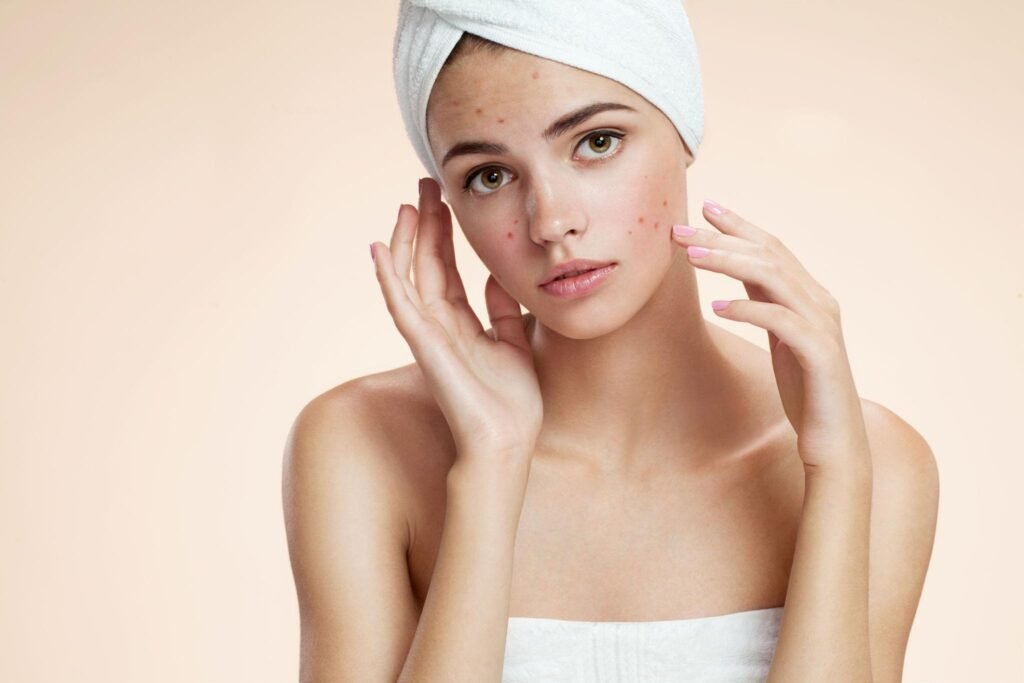

Pimples are a common skin concern that can affect teenagers and adults. They may appear on the forehead, cheeks, chin, nose, and other areas of the body. While occasional breakouts are normal, frequent pimples can be frustrating and may affect your confidence.
The good news is that a gentle and consistent skincare routine can help manage mild breakouts. Choosing suitable skincare products, avoiding irritating home remedies, and following healthy skin habits can make a difference over time.
If you are wondering how to get rid of pimples at home, this guide covers nine practical ways to care for acne-prone skin, ingredients worth understanding, and common mistakes to avoid.
Remember that pimples have different causes, and no home remedy can guarantee permanently clear skin. Persistent or severe acne may need professional treatment.
What Causes Pimples?
Pimples develop when hair follicles become clogged with oil (sebum) and dead skin cells. Bacteria and inflammation can also contribute to acne.
Several factors may influence breakouts, including:
- Hormonal changes, particularly during puberty and menstruation.
- Excess oil production.
- Dead skin cells building up inside pores.
- Certain skincare, makeup, or haircare products.
- Genetic factors and family history.
- Some medications and individual health conditions.
Acne is not simply caused by having dirty skin. Washing your face too frequently or scrubbing aggressively will not cure it and may make irritation worse.
9 Ways to Get Rid of Pimples at Home
#1. Wash Your Face With a Gentle Cleanser
Cleansing helps remove excess oil, sweat, makeup, and everyday dirt from the skin. However, using a harsh cleanser can strip the skin and cause dryness or irritation.
Choose a gentle, non-abrasive facial cleanser suitable for your skin type.
Follow these simple tips:
- Wash your face twice daily, in the morning and evening.
- Use lukewarm water rather than very hot water.
- Clean your face gently with your fingertips.
- Avoid rough scrubbing brushes and harsh exfoliating products.
- Remove makeup before going to bed.
A gentle cleansing routine is a better starting point than repeatedly washing your face throughout the day.
#2. Consider Salicylic Acid for Clogged Pores
Salicylic acid is an ingredient commonly used in products designed for acne-prone skin. It helps loosen the buildup of dead skin cells inside pores and may be useful for blackheads, whiteheads, and some mild breakouts.
If you want to try a salicylic acid product:
- Start with a product formulated for facial use.
- Follow the instructions on its packaging.
- Introduce it gradually rather than using several exfoliating products together.
- Use a moisturizer if your skin feels dry.
- Stop using it if you develop significant irritation.
Not every skin type responds in the same way. If you have sensitive skin, ask a qualified skincare or healthcare professional before introducing an active ingredient.
#3. Look for Benzoyl Peroxide in Acne Treatments
Benzoyl peroxide is a commonly used acne-treatment ingredient. It helps reduce acne-causing bacteria and can be useful for inflammatory pimples.
When choosing a benzoyl peroxide product, consider the following:
- Select a product intended for acne treatment.
- Follow the product directions carefully.
- Start cautiously to see how your skin responds.
- Avoid applying more than recommended.
- Use a suitable moisturizer to help manage dryness.
Benzoyl peroxide can cause dryness, redness, peeling, or irritation. It can also bleach towels, clothing, and pillowcases, so allow the product to dry before contact with fabrics.
If you experience severe irritation or swelling, discontinue use and seek professional advice.
#4. Use a Lightweight, Non-Comedogenic Moisturizer
Many people with pimples avoid moisturizers because they worry that applying cream will make their skin oilier. However, acne-prone skin can also become dry, particularly when using acne-treatment products.
Choose a moisturizer labelled:
- Non-comedogenic.
- Oil-free, if you prefer a lighter formula.
- Won’t clog pores.
- Suitable for your skin type.
Apply moisturizer after cleansing and whenever your skin feels dry.
A suitable moisturizer can help support the skin barrier and make it easier to tolerate certain acne treatments.
#5. Apply Sunscreen Every Morning
Sun protection is an important part of caring for acne-prone skin. Some acne treatments can make the skin more sensitive to sunlight, and sun exposure can contribute to dark marks left after pimples.
Choose a broad-spectrum sunscreen with SPF 30 or higher. Look for a lightweight, non-comedogenic formula if heavier products feel uncomfortable on your skin.
Remember to:
- Apply sunscreen to your face and neck.
- Use an adequate amount according to the product directions.
- Reapply approximately every two hours when outdoors.
- Reapply after swimming, sweating, or towel drying.
Sunscreen does not directly treat pimples, but it helps protect your skin while you manage breakouts.
#6. Avoid Touching, Picking, or Popping Pimples
It can be tempting to squeeze a pimple when it becomes visible, but doing so may increase inflammation and damage the surrounding skin.
Picking or popping pimples can increase the risk of:
- Dark marks after a breakout.
- Scarring.
- Additional irritation.
- Longer healing time.
Try to keep your hands away from your face throughout the day. If a pimple is painful, deep, or repeatedly appearing in the same area, seek professional advice instead of trying to remove it yourself.
#7. Use a Cool Compress for Temporary Swelling
A cool compress may help temporarily soothe a swollen or uncomfortable pimple. However, it does not remove the underlying cause of acne.
To use a cool compress safely:
- Take a clean, soft cloth.
- Dampen it with cool water.
- Gently place it against the affected area for a short period.
- Avoid rubbing or pressing the pimple.
- Stop if your skin feels uncomfortable.
Never place ice directly on your skin. Avoid using extreme cold or keeping a cold compress on one area for too long.
#8. Keep Your Hair and Hair Products Away From Your Face
Oily hair and certain haircare products may contribute to clogged pores, especially around the forehead and hairline.
A few simple habits may help:
- Keep long hair away from your face when possible.
- Shampoo regularly, particularly if your scalp becomes oily.
- Avoid allowing heavy hair oils and styling products to remain on your forehead.
- Clean hair accessories regularly.
- Change pillowcases regularly.
If you notice breakouts mainly around your hairline, reviewing your haircare products may be useful.
#9. Follow a Consistent Skincare Routine
Changing skincare products too frequently can make it difficult to understand what works for your skin. It may also increase irritation, particularly when several active ingredients are introduced together.
A simple routine is often a better starting point.
Morning routine:
- Gentle cleanser.
- Suitable moisturizer.
- Broad-spectrum sunscreen with SPF 30 or higher.
Evening routine:
- Gentle cleanser.
- One suitable acne-treatment product, if appropriate.
- Moisturizer.
Introduce acne treatments gradually and follow their product instructions. Avoid starting several new active ingredients at the same time.
For more guidance, read our article on Simple Skincare Routine for Beginners.
Common Home Remedies You Should Avoid for Pimples
Not every natural ingredient is safe to apply to your face. Some popular DIY remedies may irritate the skin without providing reliable acne benefits.
Here are a few remedies to avoid:
Toothpaste
Toothpaste is designed for cleaning teeth, not treating pimples. Its ingredients may cause dryness, irritation, or redness when applied to facial skin.
Lemon Juice
Lemon juice can irritate facial skin. Citrus juice on skin exposed to sunlight may also cause a reaction known as phytophotodermatitis.
It is better to use skincare products formulated and tested for facial use.
Baking Soda
Baking soda is not a recommended acne treatment. Applying it to your face may disturb the skin’s natural protective barrier and cause irritation.
Garlic
Raw garlic can cause significant skin irritation and even chemical burns. Avoid applying crushed or raw garlic directly to pimples.
Undiluted Apple Cider Vinegar
Apple cider vinegar is acidic and may irritate or burn the skin when applied directly. It should not be treated as a safe DIY facial acne solution.
Cinnamon and Other Harsh DIY Mixtures
Cinnamon and other kitchen ingredients may trigger irritation or allergic reactions. A natural ingredient is not automatically suitable for facial skin.
Instead of experimenting with harsh household remedies, choose products specifically formulated for acne-prone skin.
How Long Does It Take to Get Rid of Pimples?
Pimples do not usually disappear overnight. The time needed to see improvement depends on the type of acne, the products being used, and individual skin characteristics.
Some people notice gradual improvement after several weeks of consistent care, while others may need a longer treatment plan.
Keep these points in mind:
- Avoid changing your routine every few days.
- Follow the instructions for acne-treatment products.
- Do not apply excessive amounts in an attempt to get faster results.
- Monitor your skin for irritation.
- Seek professional guidance if breakouts continue or become painful.
Patience and consistency are important when managing acne.
When Should You Consult a Skincare or Healthcare Professional?
Home skincare may be helpful for mild breakouts, but it is not suitable for every type of acne.
Consider professional advice if:
- You have deep, painful pimples or cysts.
- Your acne is leaving scars or persistent dark marks.
- Breakouts are spreading or becoming more severe.
- Over-the-counter products are not helping.
- Your skin develops significant irritation from acne products.
- Acne is affecting your confidence or emotional well-being.
A qualified professional can help identify the type of acne and recommend an appropriate treatment plan.
Conclusion
Managing pimples at home starts with understanding your skin and choosing products that support it rather than irritate it. Gentle cleansing, suitable acne-treatment ingredients, regular moisturizing, and daily sun protection can all play a role in a simple skincare routine.
Avoid harsh DIY remedies, resist the temptation to pop pimples, and give suitable products time to work. If your acne is painful, persistent, or causing scars, seek advice from a qualified skincare or healthcare professional.
Frequently Asked Questions
Q1. How can I get rid of pimples naturally at home?
Start with gentle cleansing, a suitable moisturizer, sunscreen, and habits such as avoiding picking or squeezing pimples. There is no natural remedy guaranteed to remove acne permanently.
Q2. Can ice remove pimples overnight?
No. Ice cannot remove the underlying cause of a pimple. A cool compress may temporarily soothe swelling, but it is not an acne treatment.
Q3. Is toothpaste good for pimples?
No. Toothpaste is not designed for facial acne treatment and may cause irritation, redness, or dryness.
Q4. Can I use aloe vera on acne-prone skin?
Some people find simple aloe vera gel soothing, but it is not a proven replacement for acne treatments. Choose a suitable product, check its ingredients, and stop using it if irritation develops.
Q5. Does drinking more water clear pimples?
Drinking enough water supports general health, but drinking extra water alone is not a proven treatment for acne. A consistent skincare routine and suitable acne treatments are more relevant.
Q6. Should I moisturize if I have pimples?
Yes. Acne-prone skin can also become dry or irritated. Choose a suitable non-comedogenic moisturizer to help maintain skin comfort.
Q7. How often should I wash my face if I have pimples?
For most people, washing gently twice a day and after sweating is a reasonable approach. Washing too frequently or scrubbing aggressively can irritate the skin.
Q8. Can pimples go away permanently?
Acne can improve significantly, but it may return, particularly when hormonal or other contributing factors remain. The right treatment can help manage breakouts and reduce the risk of scarring.
For additional information about acne care and skincare, you can explore these trusted resources:
- American Academy of Dermatology – Acne: Tips for Managing
- American Academy of Dermatology – Moisturizer and Acne
- NHS – Acne: Self-care and When to Seek Help
Disclaimer: This article is for general informational purposes only and is not a substitute for professional skincare advice. Before trying any skincare product or changing your routine, consult a qualified skincare or healthcare professional to make sure it is suitable for your skin.
About Author


