

Have you ever applied your sunscreen, started getting ready for the day, and noticed little flakes or tiny rolls forming on your face? It can be frustrating, especially when you are trying to create a smooth base for makeup.
This is commonly called sunscreen pilling. It happens when sunscreen or another skincare product begins to roll, peel, or gather on the surface of your skin instead of sitting smoothly.
The good news is that a few changes to your skincare routine may help reduce the problem. Understanding why pilling happens is a useful first step.
What Is Sunscreen Pilling?
Sunscreen pilling occurs when a skincare product forms small visible particles on the skin. You may notice it while rubbing your face, applying foundation, or blending concealer.
It does not automatically mean that your sunscreen is ineffective. However, if the product is visibly coming off, it can be difficult to know whether you have applied an even layer. Since sunscreen needs to form a reasonably uniform film on the skin, it is worth adjusting your application rather than ignoring the issue.
Why Does Sunscreen Pill Under Makeup?
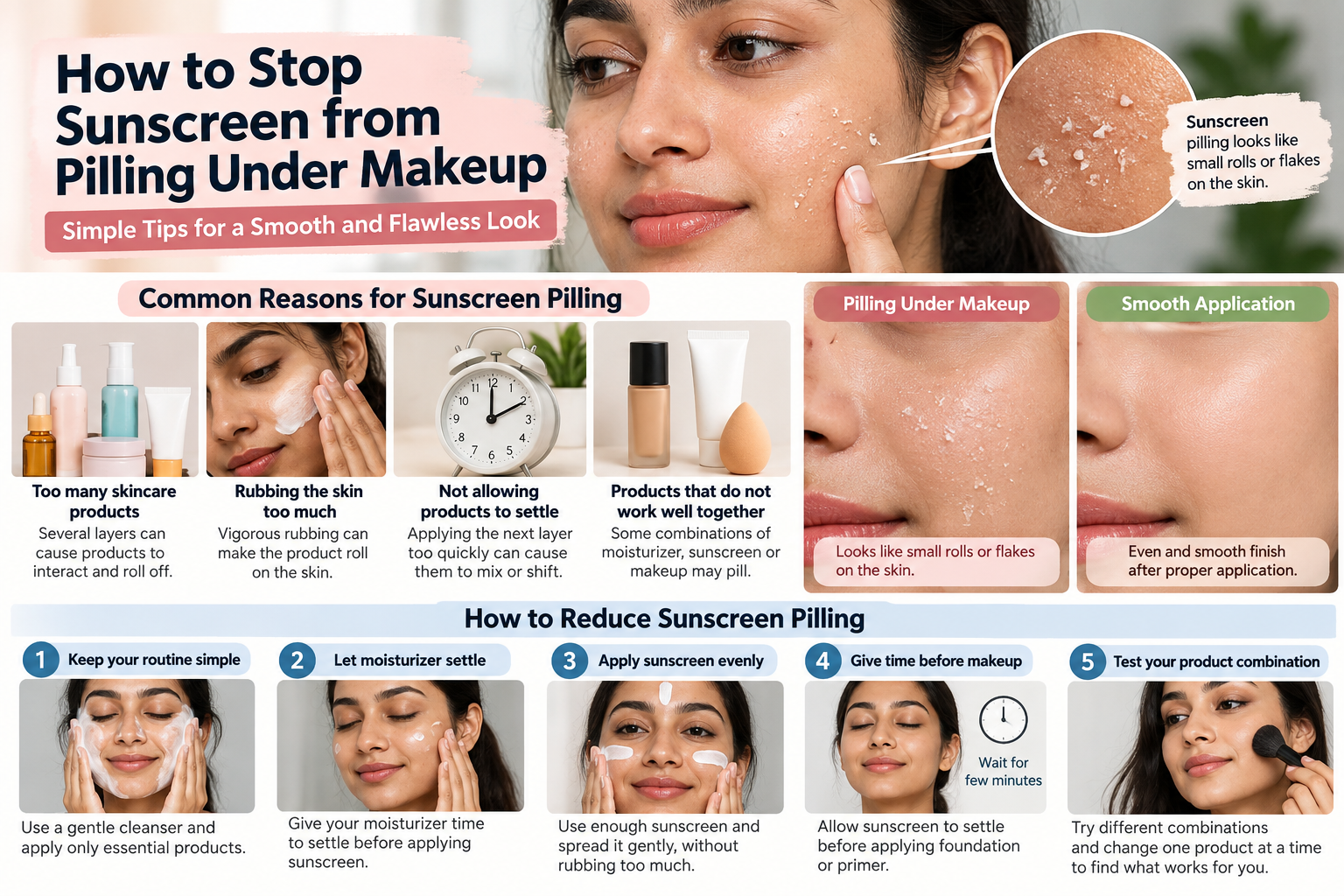
There is no single reason why sunscreen pills. Sometimes it is the combination of products, while in other cases the application technique may be contributing to the problem.
#1. Applying Too Many Skincare Products
Using several layers of serum, moisturizer, facial oil, sunscreen, and primer can sometimes make products interact poorly.
For example, if you apply a rich moisturizer and immediately layer sunscreen over it, the products may move around instead of settling evenly.
You do not necessarily need to remove every step from your routine. Start by simplifying it and see whether the pilling improves.
#2. Rubbing the Skin Too Much
Some people vigorously massage sunscreen into their face, particularly when they are in a hurry. Repeated rubbing can cause a product to roll up, especially if earlier layers have not settled.
Try spreading sunscreen gently and evenly. Avoid repeatedly rubbing the same area once the product has been applied.
#3. Not Allowing Products to Settle
Applying one product immediately after another may cause the layers to mix or shift.
Allow your moisturizer to settle before applying sunscreen. After sunscreen application, follow the product label and allow it to set before applying makeup.
There is no universal waiting time that works for every formula, so pay attention to how your own products behave.
#4. Using Products That Do Not Work Well Together
Different skincare and makeup formulas can behave differently when layered. A particular moisturizer, sunscreen, or primer combination may pill, even if each product works well on its own.
If you suspect a combination is causing the problem, try changing one step at a time. This can help you identify which product or layer is contributing.
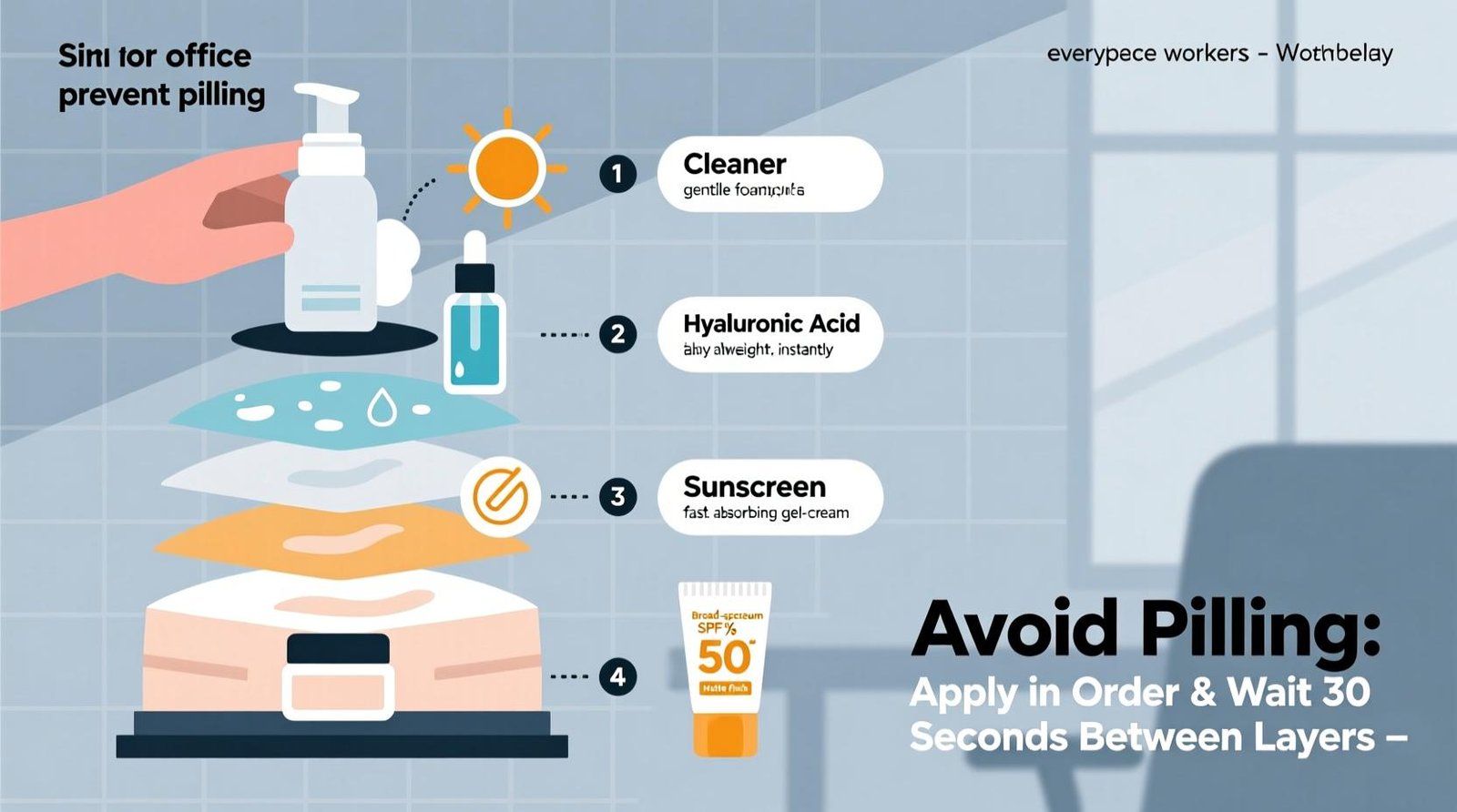
How to Reduce Sunscreen Pilling: A Simple Routine
If sunscreen keeps rolling off your face, try the following approach.
Step 1: Keep Your Morning Routine Simple
Start with a gentle cleanser if your skin needs cleansing. Apply your usual moisturizer if required, then sunscreen.
You can temporarily leave out unnecessary serums or facial oils to see whether fewer layers make a difference.
Step 2: Let Your Moisturizer Settle
Give your moisturizer time to settle on your skin before applying sunscreen. If your face still feels very slippery or coated, consider whether you are using more moisturizer than you need.
The right amount depends on the formula and your skin’s needs.
Step 3: Apply Sunscreen Evenly
Follow the directions on your sunscreen label. Apply enough to cover the areas exposed to sunlight, including commonly missed areas such as the ears and sides of the face.
Spread it gently instead of vigorously rubbing it back and forth.
Do not reduce the amount of sunscreen simply to prevent pilling. If your current product pills when applied as directed, consider trying a different formula after checking that it provides the protection you need.
Step 4: Give Sunscreen Time Before Makeup
Allow sunscreen to settle before applying foundation or primer. Follow the sunscreen’s directions and avoid repeatedly touching the skin during this time.
When you apply makeup, use gentle motions. Pressing or lightly blending makeup may work better for your routine than vigorous rubbing.
Step 5: Test Your Product Combination
If the problem continues, try applying your sunscreen over your regular moisturizer without other optional layers.
You can also test how the sunscreen behaves on clean skin, provided that doing so is appropriate for your skin and the product instructions.
Change one product at a time rather than replacing your entire routine. This makes it easier to understand what is causing the issue.
Should You Change Your Sunscreen?
Not necessarily. Pilling does not always mean that a sunscreen is unsuitable for your skin.
Before replacing it, review your application technique and the products you layer underneath it. If the sunscreen continues to pill, feels uncomfortable, or is difficult to apply evenly, you may want to explore another formula.
When choosing a sunscreen, consider its labelled sun protection, whether it is suitable for your skin, and how comfortably you can apply it in the recommended amount.
If you have sensitive skin, a history of reactions, or a skin condition, seek advice from a qualified skincare professional before introducing a new product. Stop using a product that causes persistent irritation and seek appropriate advice.
Can You Apply More Sunscreen If It Pills?
Sunscreen needs to be applied according to its directions and reapplied as recommended, especially when spending time outdoors.
If you notice pilling, do not assume that adding more product on top will solve the problem. The layers may continue to roll off.
If you cannot achieve an even application, gently remove the affected layers and reapply sunscreen as directed. When outdoors, use additional sun-protection measures such as shade, protective clothing, and a hat.
FAQs.
Q1. Does sunscreen pilling mean my sunscreen is not working?
Not necessarily. Pilling alone does not tell you whether a sunscreen is effective. However, visible product coming off can make it difficult to assess whether the sunscreen has formed an even layer. Apply it according to its directions and address persistent pilling.
Q2. Should I skip moisturizer to prevent sunscreen pilling?
Not everyone needs to skip moisturizer. If your skin feels dry or tight, moisturizer may still be helpful. Try adjusting the amount or allowing it to settle before applying sunscreen.
Q3. Can sunscreen pill because of my foundation?
Yes, the combination of sunscreen and makeup can contribute to pilling. Try applying makeup gently after the sunscreen has settled, or test a different compatible makeup formula.
Q4. Is sunscreen pilling harmful to the skin?
Pilling itself is usually a cosmetic application issue. However, if you experience burning, itching, redness, or persistent discomfort, stop using the product and seek advice from a qualified skincare professional.
Conclusion
Sunscreen pilling can make your morning routine feel more complicated than it needs to be. Often, a simpler routine, gentle application, and a little patience can help you identify what is happening.
Remember that every person’s skin and product preferences are different. Before trying a new sunscreen, serum, moisturizer, or other skincare product, consider consulting a qualified skincare professional, particularly if you have sensitive skin or an existing skin concern. Choose products carefully, follow their directions, and pay attention to how your skin responds.
About Author


