
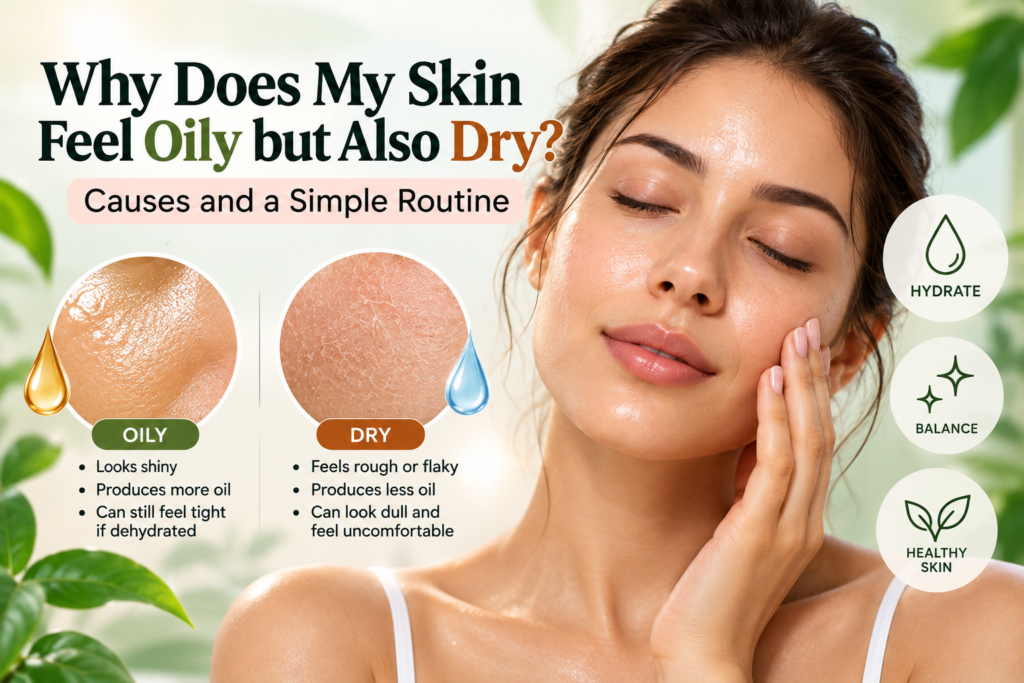

Have you ever washed your face, noticed that it looks shiny a little later, but still felt tightness or roughness around your cheeks? It can be confusing. You may think your skin is oily, yet it doesn’t feel comfortable or properly moisturized.
This can happen when your skin produces oil but lacks enough water in its outer layer. The condition is often described as oily but dehydrated skin. It’s not the same as having naturally dry skin, and the right routine may be different.
In this guide, we’ll explain why your skin can feel oily and dry at the same time, how to tell the difference between dryness and dehydration, and how to build a simple skincare routine without overwhelming your skin.
This article provides general skincare information. If you have persistent irritation, painful acne, a rash, or symptoms that are getting worse, consult a qualified skincare or healthcare professional before trying new products.
What Does Oily but Dehydrated Skin Mean?
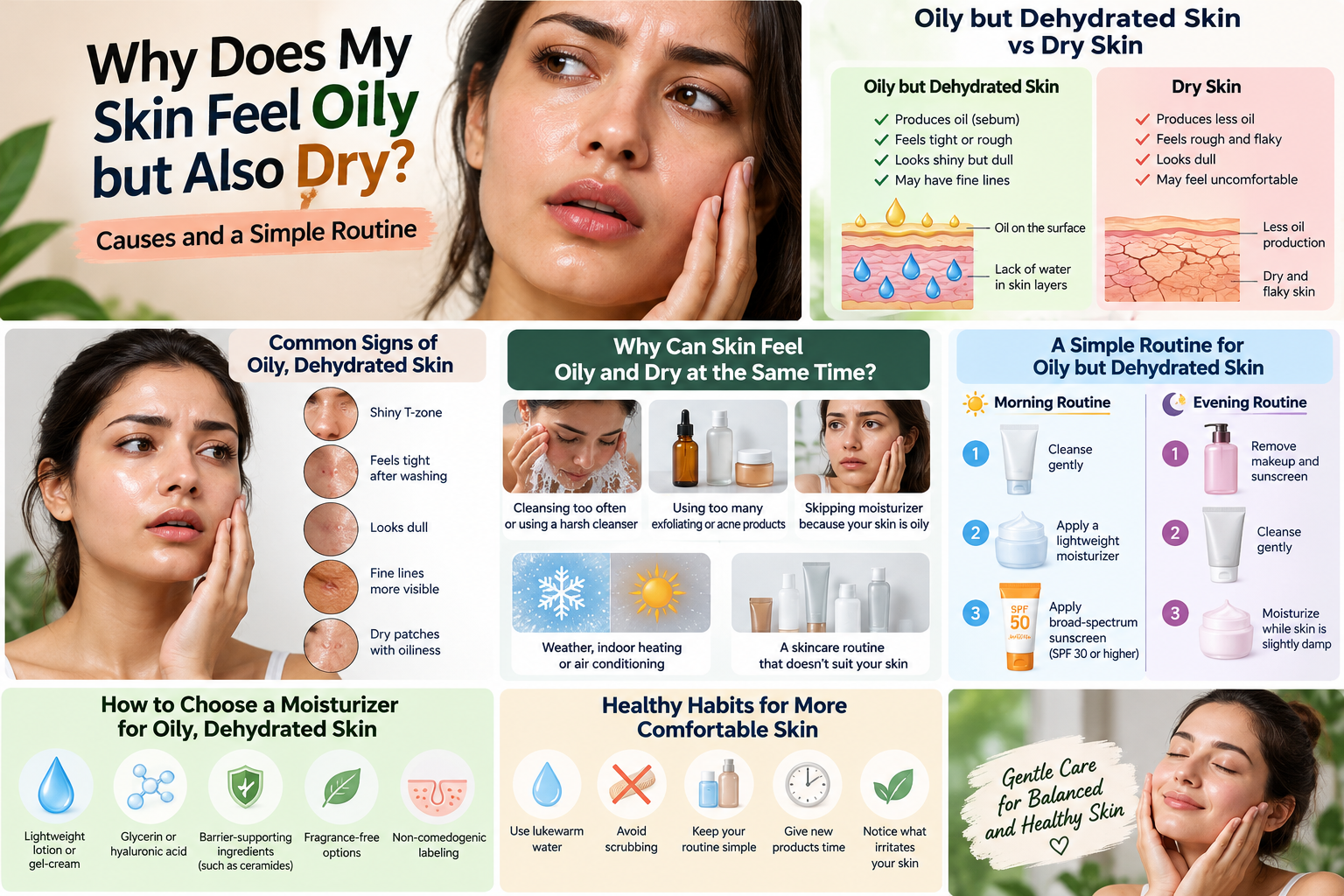
Your skin can produce sebum—the natural oil that helps protect its surface—while still having a shortage of water in its outer layer.
That’s why you might notice two seemingly opposite signs:
Oiliness: Your forehead, nose, or chin looks shiny.
Dehydration: Your skin feels tight, looks temporarily dull, or has fine lines that seem more noticeable.
Dehydration is a condition that can affect different skin types, including oily skin. By contrast, dry skin usually refers to a skin type that produces less oil and may feel rough, flaky, or uncomfortable.
The two can overlap. Someone with naturally oily skin may also experience dryness or irritation, especially after using products that are too harsh.
Common Signs of Oily, Dehydrated Skin
Not everyone experiences the same symptoms, but you may notice:
- Your face becomes shiny during the day, yet feels tight after cleansing.
- Your skin looks dull even when it produces oil.
- Makeup or sunscreen settles into dry-looking patches.
- Your cheeks feel uncomfortable while your T-zone is oily.
- Your skin seems more sensitive after using exfoliating or acne products.
These signs can have other causes, too. For example, irritation, eczema, or a skin condition may also cause tightness or flaking. Don’t assume every uncomfortable feeling is simply dehydration.
Why Can Skin Feel Oily and Dry at the Same Time?
#1. Cleansing too often or using a harsh cleanser
A cleanser that leaves your face feeling “squeaky clean” may be too stripping for you. Frequent washing, hot water, or strong cleansing products can disturb the skin’s protective outer layer and leave it feeling tight.
What to try: Use a gentle cleanser that doesn’t leave your skin uncomfortable. For many people, washing in the evening and rinsing with water or using a gentle cleanse in the morning is enough—but your needs may vary.
#2. Using too many exfoliating or acne products
Products containing exfoliating acids, retinoids, or acne-fighting ingredients can be helpful for some concerns. However, using several active products together—or using them too frequently—may cause dryness, stinging, or peeling.
What to try: Simplify your routine if your skin feels irritated. Avoid adding multiple new active ingredients at once, and follow the product directions. If you use a prescribed treatment, ask the healthcare professional who recommended it before changing how you use it.
#3. Skipping moisturizer because your skin is oily
It’s understandable to avoid moisturizer when your face already looks shiny. But oily skin can still benefit from a moisturizer that feels comfortable and helps support the skin barrier.
What to try: Look for a lightweight, fragrance-free moisturizer labelled non-comedogenic if you’re prone to clogged pores. Ingredients such as glycerin or hyaluronic acid can help attract water, while other moisturizing ingredients help reduce water loss. No single ingredient works perfectly for everyone.
#4. Weather, indoor heating, or air conditioning
Cold weather, low humidity, air conditioning, and indoor heating can contribute to skin feeling dry or tight. Your skin may still produce oil, so the combination can feel confusing.
What to try: Adjust your moisturizer according to how your skin feels. You may prefer a lighter texture in humid weather and a richer one when the air is dry.
#5. A skincare routine that doesn’t suit your skin
A product that works well for one person may not suit another. Strong fragrance, frequent product changes, or layering many products can sometimes leave skin irritated.
What to try: Keep your routine simple for a while. Introduce new products one at a time and patch-test them according to the product instructions.
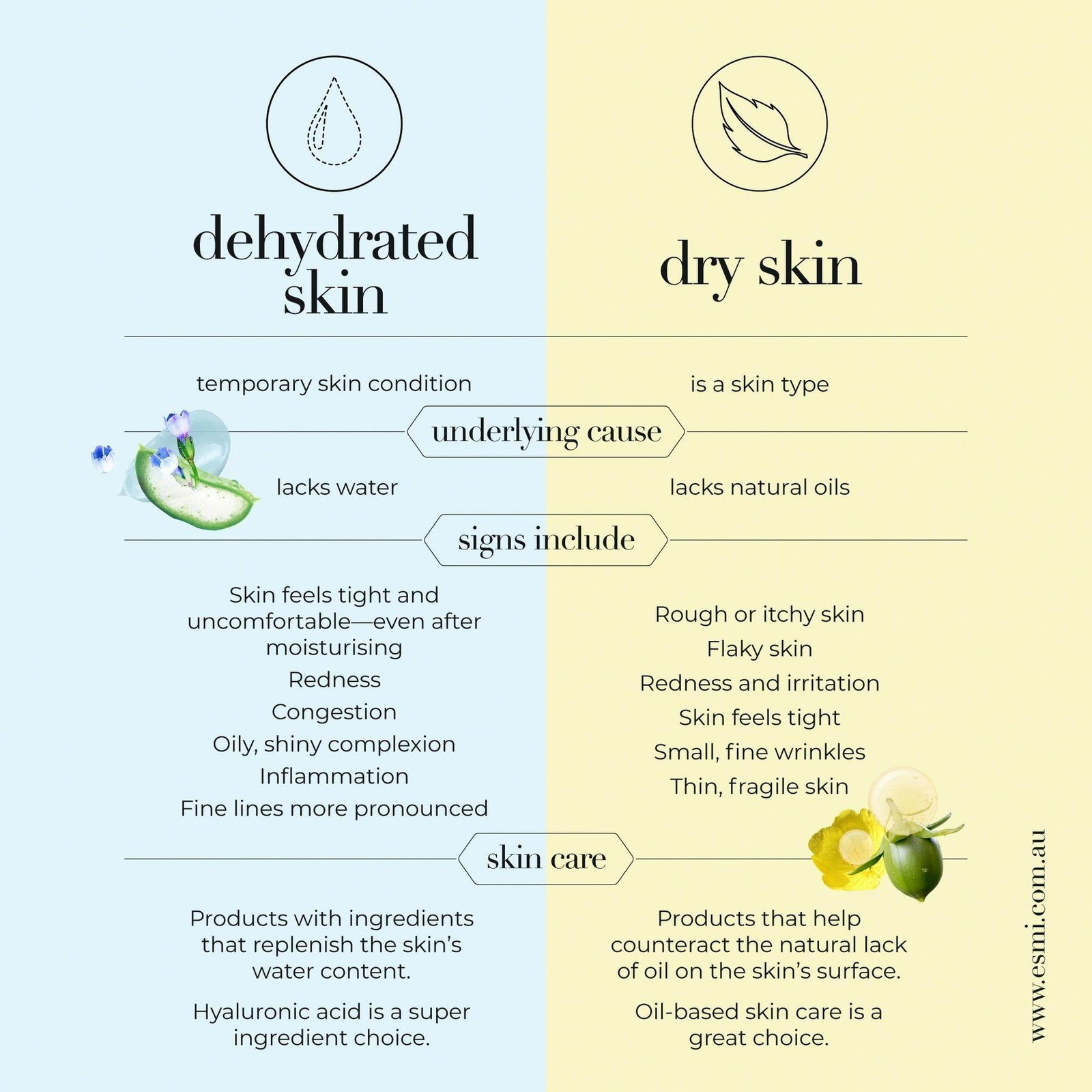
A Simple Routine for Oily but Dehydrated Skin
You don’t need a shelf full of products to care for skin that feels oily and dry. Start with a few basic steps and adjust based on how your skin responds.
Morning routine
#1. Cleanse gently
Use a mild cleanser if your skin needs it. If cleansing in the morning makes your face feel tight, consider whether a gentle rinse is enough for you.
#2. Apply a lightweight moisturizer
Choose a moisturizer that feels comfortable and doesn’t leave your skin stinging. A gel-cream or light lotion may suit some oily skin types, but texture preference is personal.
#3. Apply broad-spectrum sunscreen
Use a broad-spectrum sunscreen with SPF 30 or higher, following its label directions. Apply enough to cover exposed skin and reapply as directed, especially when outdoors, sweating, or swimming.
If sunscreen pills or feels uncomfortable, try applying it over a moisturizer that has settled into your skin. Avoid mixing sunscreen with other products in your hand, as this can affect how evenly it applies.
Evening routine
#1. Remove sunscreen and makeup
Cleanse gently to remove the day’s sunscreen, makeup, and dirt. If you use a first-step makeup remover, follow with a mild cleanser if needed.
#2. Moisturize
Apply your moisturizer while your skin is slightly damp if that feels comfortable. You don’t need to rub vigorously or apply a thick layer.
#3. Keep active ingredients optional
If your skin is comfortable, you may have a reason to use a targeted product for a specific concern. But if you’re experiencing tightness, stinging, or peeling, pause non-essential exfoliating products and focus on gentle cleansing and moisturizing.
If symptoms persist, seek advice from a qualified skincare or healthcare professional.
How to Choose a Moisturizer for Oily, Dehydrated Skin
When comparing moisturizers, focus on how the product feels and how your skin responds—not just the words on the label.
You may want to consider:
Lightweight lotion or gel-cream: May feel more comfortable if you dislike a heavy finish.
- Humectants such as glycerin: Help attract water to the skin.
- Barrier-supporting ingredients: Some moisturizers contain ingredients such as ceramides that help support the skin’s protective barrier.
- Fragrance-free options: May be a sensible starting point if your skin is easily irritated.
- Non-comedogenic labelling: Can be useful if you’re concerned about clogged pores, though it cannot guarantee a product will suit everyone.
If a product causes burning, itching, swelling, or a worsening rash, stop using it. For severe or persistent reactions, get medical advice.
Habits That May Help Your Skin Feel More Comfortable
A few small changes can make your routine easier to manage:
- Use lukewarm rather than very hot water.
- Avoid scrubbing your face to remove oil.
- Don’t keep adding products every time your skin feels different.
- Give a new, non-prescribed skincare product time to assess how your skin responds, while stopping it if irritation develops.
- Notice whether your skin feels worse after a particular cleanser, treatment, or environmental change.
You don’t need to eliminate every bit of shine. The goal is skin that feels comfortable, not skin that looks completely matte all day.
FAQs.
Q1. Can oily skin really be dehydrated?
Yes. Oil production and water content are different things. Oily skin can still feel tight or look dull when its outer layer lacks water.
Q2. Should I stop using moisturizer if my face is shiny?
Not necessarily. A moisturizer with a comfortable, lightweight texture may help your skin feel less tight. Choose one based on your skin’s response rather than avoiding moisturizer solely because you have oily skin.
Q3. Is oily but dehydrated skin the same as combination skin?
Not exactly. Combination skin usually describes areas of the face that differ in oiliness—for example, an oily T-zone and drier cheeks. Dehydration describes a lack of water in the skin’s outer layer. A person can have combination skin, dehydration, or both.
Q4. How long does it take for a simple routine to help?
It varies. Some people notice that their skin feels more comfortable after making their routine gentler, while other concerns may take longer or need professional assessment. If tightness, irritation, or flaking continues, don’t keep experimenting with products—seek qualified advice.
Conclusion:
If your face feels oily but also dry, it doesn’t mean you need to dry it out further. Oil and hydration are not the same, and harsh cleansing or overusing active products may make discomfort worse.
Start with gentle cleansing, a moisturizer that suits your skin, and daily sunscreen. Keep the routine simple, introduce products cautiously, and pay attention to how your skin responds. If you’re dealing with ongoing irritation or a persistent skin problem, consult a qualified skincare or healthcare professional for personalized guidance.
Disclaimer: This article is for general informational purposes only and is not a substitute for professional skincare advice. Before trying any skincare product or changing your routine, consult a qualified skincare or healthcare professional to make sure it is suitable for your skin
About Author


