
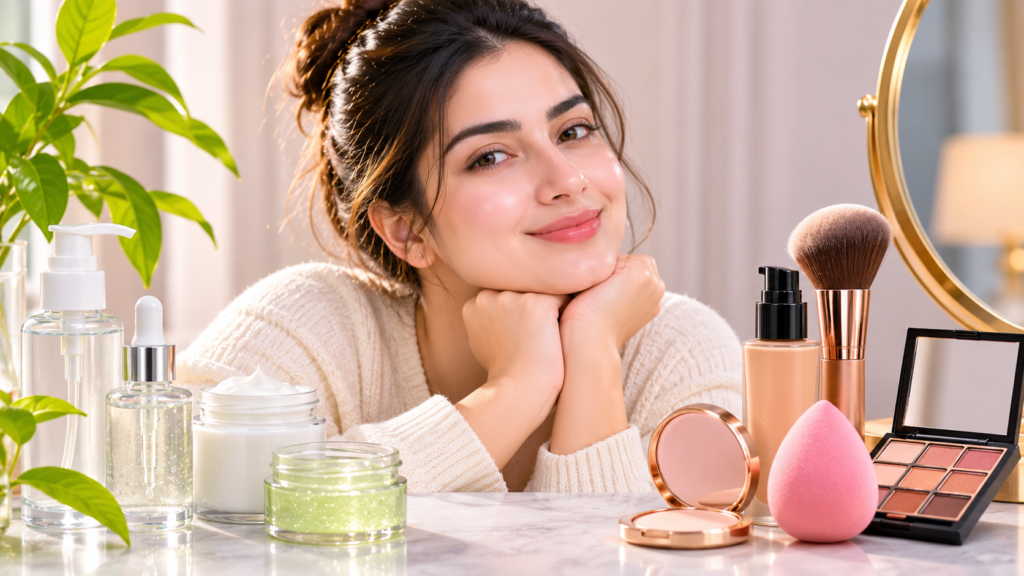

Everyone wants their makeup to look flawless, but sometimes the skin does not cooperate. It does not matter whether you have the best foundation, concealer, setting powder or eyeshadow palette. You can buy expensive makeup or hire a professional makeup artist, but if your skin is dry, dull or not properly hydrated, your makeup may not look as smooth as you expect.
Skincare and makeup go hand in hand. When your skin feels hydrated and comfortable, makeup can add colour and enhance your natural features. This is exactly what makeup should do: enhance your appearance rather than hide your face. That is why it is important to include suitable skincare in your routine to keep your skin healthy and comfortable, even without makeup.
Understanding how skincare and makeup work together can help you achieve a smoother, more natural-looking finish without constantly adding more products to your routine. If you are new to skincare, you can also read our guide to a simple skincare routine for beginners.
Skincare Creates the Foundation for Makeup
Makeup sits directly on your skin, so preparing your skin before applying primer, foundation or other makeup products is important. A suitable skincare routine helps maintain hydration and supports the skin barrier, creating a more comfortable base for makeup.
For example, applying foundation to dry skin can make it look flaky or patchy because the product may cling to dry areas. Similarly, if you have oily skin and do not prepare it properly, your makeup may look excessively shiny throughout the day.
A simple skincare routine can make a noticeable difference. It does not have to include numerous products for different times of the day. A gentle cleanser, a suitable serum if needed and a moisturiser may be enough for many people. The goal is not to apply more and more products to your face, but to choose the right products in suitable amounts.
The Wrong Product Combination Can Affect Your Makeup
One reason makeup may not look smooth is that certain skincare and makeup products do not layer well together. For instance, applying a large amount of rich moisturiser and immediately following it with foundation may cause the makeup to move around or sit unevenly.
However, this does not mean that every rich moisturiser is incompatible with lightweight foundation. The result depends on the product formulations, the amount applied and how much time each layer gets to settle.
Choosing random combinations of skincare and makeup products can also cause problems. Here are a few combinations and habits worth paying attention to:
Heavy Moisturiser and Oily Foundation:
If you have oily skin, using a large amount of rich moisturiser followed by a foundation with a very dewy finish may make your face look excessively greasy and shiny. If you want to avoid repeatedly wiping your face throughout the day, choose products that feel comfortable on your skin and do not add unnecessary layers.
Too Many Skincare Layers:
Using too many products is not the key to healthy-looking skin. You may have seen influencers applying numerous skincare products in the hope of achieving better results, but your skin does not necessarily need all those layers. A simple routine with suitable products is often more practical.
Incompatible Product Formulas:
Certain skincare and makeup formulations may not layer well together. This can sometimes result in pilling, uneven application or foundation separating on the skin. If you experience this problem, try simplifying your routine and introducing products one at a time.
Insufficient Moisturising:
Skipping moisturiser may not be a good choice if you have dry or combination skin. Applying foundation without preparing dry areas can cause the product to cling to flakes and create a patchy appearance. Choose a moisturiser that suits your skin type instead of skipping this step.
Choose Skincare According to Your Skin Type
Because every skin type behaves differently, it is important to choose products according to your skin’s needs. Here are a few tips to consider before buying skincare products.
For Oily Skin:
If your skin produces excess oil, you may prefer a lightweight, non-greasy or gel-based moisturiser. Look for products that feel comfortable and do not leave a heavy finish. However, oily skin still needs moisturising, so skipping this step completely is not necessary.
For Dry Skin:
Dry skin needs suitable moisturisation to help reduce water loss and improve comfort. Look for moisturisers containing ingredients such as glycerin, hyaluronic acid and ceramides. These ingredients can help support hydration and the skin barrier.
You can also read our guide to a skincare routine for girls with dry skin for more product-selection tips.
For Combination Skin:
Combination skin can be tricky to manage because different areas of your face may have different needs. You can use a lightweight moisturiser on oilier areas and a more nourishing formula on dry areas if needed. Alternatively, choose a moisturiser designed for combination skin.
For Sensitive Skin:
If you have sensitive skin, be careful about the products you apply to your face. Keep your routine simple and check the ingredient list before trying a new product. Fragrance-free products may be a suitable option if fragrance tends to irritate your skin. Introduce new products gradually and stop using anything that causes discomfort.
Give Your Skincare Products Time to Settle
A common mistake when preparing the skin for makeup is not allowing skincare products to settle before applying the next layer. When you apply moisturiser, sunscreen, primer and foundation one after another while the previous layer is still very wet or slippery, the products may move around or pill.
Instead, follow a simple approach:
- Start your routine with a gentle cleanser to remove dirt, oil and other buildup.
- Apply moisturiser and allow it to settle comfortably on your skin.
- Always follow up with sunscreen during the daytime, even when it is cloudy.
- Allow sunscreen to form an even film according to the product instructions.
- Once your skincare layers have settled, apply primer, foundation and other makeup products gradually.
If you are wondering how long you need to wait between skincare steps, there is no fixed waiting time for every product. The important thing is to avoid applying the next product while the previous layer is excessively wet or slippery. Follow the product instructions and adjust according to the texture of your products.
For more information about product layering, read our guide on what order to apply skincare products.
Why Sunscreen Should Never Be Ignored Before Makeup
Sunscreen is an important part of your daytime skincare routine. Some people think that makeup products provide enough protection, but that is not always the case. Foundation or makeup with SPF should not automatically replace a dedicated sunscreen because people generally apply less makeup than the amount needed to achieve the labelled SPF protection.
Here are a few things to keep in mind while doing your makeup:
- Use an adequate amount of sunscreen according to the product instructions.
- Allow the sunscreen to settle and form an even film before applying makeup.
- Do not mix sunscreen directly into your foundation, as this can interfere with the even application and intended protection.
- Reapply sunscreen as directed, particularly when spending time outdoors. Use a suitable reapplication method that works with your makeup routine.
For more information, read our complete sun protection guide.
Common Skincare and Makeup Mistakes to Avoid
A few simple mistakes can affect how your makeup looks and feels throughout the day:
- Applying too much moisturiser immediately before foundation.
- Skipping moisturiser because you have oily skin.
- Using too many skincare products before makeup.
- Applying the next product before the previous layer has settled.
- Mixing sunscreen directly with foundation.
- Choosing skincare products without considering your skin type.
Keeping your routine simple and choosing compatible products can help reduce these common application problems.
Conclusion
Having a good makeup look is something we all want, but are we taking enough care of our skin? The way makeup looks can be affected by your skin’s hydration, texture and overall condition. Even expensive makeup products may not give you the finish you expect if your skin is not properly prepared.
When skincare and makeup complement each other, you can avoid common application problems and achieve a finish that looks more natural and feels comfortable throughout the day. Sometimes, a few small changes to your skincare routine are all you need to improve your overall makeup experience.
FAQs.
Q1. Can skincare products affect how makeup looks?
Yes. Skincare can affect how your skin looks and behaves when makeup is applied. Since skincare products influence hydration, texture and surface oil, they can affect how foundation, concealer and other makeup products apply and settle.
Q2. Should I apply moisturiser before makeup?
Yes. Using a suitable moisturiser is an important step, even if you have oily skin. A moisturiser helps keep your skin comfortable and may reduce the appearance of dry or flaky patches under makeup.
Q3. Can I use sunscreen underneath makeup?
Yes. Sunscreen is an important part of daytime skincare because it helps protect your skin from UV radiation. Apply a broad-spectrum sunscreen before makeup and allow it to form an even film according to the product instructions.
Q4. Can I mix skincare products directly with foundation?
It is generally better to apply skincare and makeup products separately because each product has a different purpose. Moisturiser helps hydrate the skin, sunscreen provides sun protection and foundation provides coverage. Mixing them together may affect how the products apply and perform.
Q5. Does expensive skincare make makeup look better?
Not necessarily. An expensive product is not always better for your skin. Some affordable products may work well for your needs, while certain expensive formulas may not suit your skin type. What matters most is choosing products that your skin tolerates and that work well together.
Disclaimer: This article is for general informational purposes only and is not a substitute for professional skincare advice. Before trying any skincare product or changing your routine, consult a qualified skincare or healthcare professional to make sure it is suitable for your skin.
About Author

