
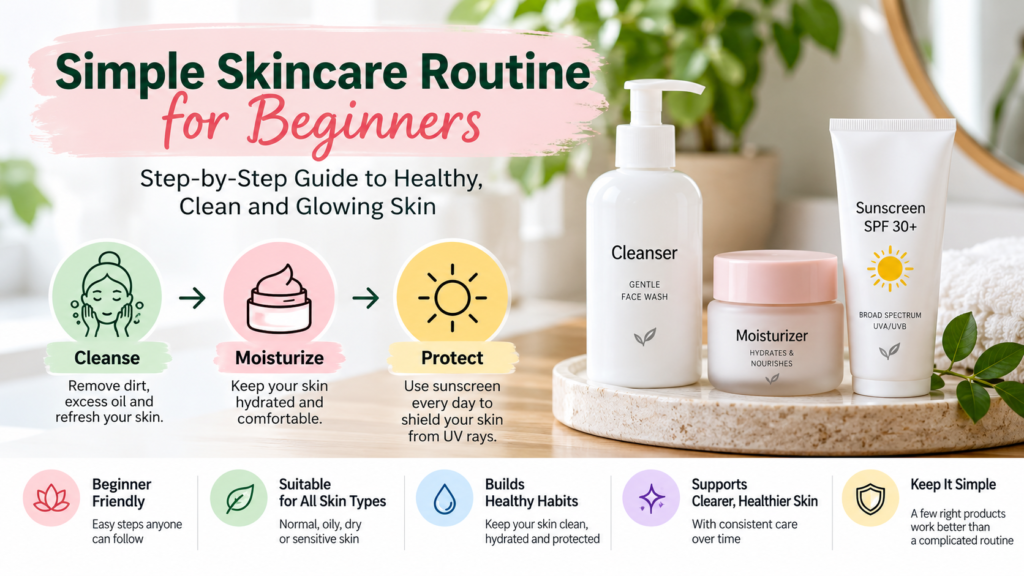

Starting a skincare routine can feel confusing. There are cleansers, moisturizers, serums, exfoliants and plenty of advice about what to use first. The good news is that you don’t need a shelf full of products to care for your skin.
A simple routine built around a few basic steps can help keep your skin clean, comfortable and protected. The best routine is one you can follow consistently—and that suits your skin’s needs.
In this guide, you’ll learn how to build a beginner-friendly skincare routine, which products to start with, and how to introduce new products without overwhelming your skin.
What Does a Basic Skincare Routine Need?
For most beginners, three essentials are a sensible starting point:
- Gentle cleanser: Helps remove sweat, excess oil, sunscreen and everyday dirt.
- Moisturizer: Helps reduce moisture loss and keep skin feeling comfortable.
- Broad-spectrum sunscreen: Helps protect skin from ultraviolet (UV) rays during the day.
You can add other products later if you have a particular concern, but starting with the basics makes it easier to notice how your skin responds.
Step 1: Cleanse Gently
A cleanser removes buildup from the skin. Choose one that leaves your face feeling comfortable—not tight, stinging or unusually dry.
- Dry or sensitive skin: Consider a gentle, fragrance-free cream or lotion cleanser.
- Oily skin: A mild gel cleanser may feel comfortable.
- Combination skin: Look for a gentle cleanser that does not leave dry areas feeling tight.
Wash with lukewarm water and use your fingertips rather than scrubbing with a rough cloth. Many people cleanse in the evening to remove sunscreen and daily buildup; in the morning, you can cleanse gently or simply rinse if that works well for your skin.
If a cleanser consistently causes burning, redness or uncomfortable tightness, stop using it and consider a gentler option.
Step 2: Apply Moisturizer
Moisturizer helps support the skin’s moisture barrier and can make skin feel softer and less tight. Apply it after cleansing, while your skin is slightly damp if that feels comfortable.
Choose a texture that suits your skin:
- Dry skin: A richer cream may provide more comfort.
- Oily skin: A lightweight lotion or gel-cream may feel less heavy.
- Sensitive skin: A simple, fragrance-free formula may be a good place to start.
Oily skin can still need moisturizer. Skipping it may leave your skin feeling uncomfortable, especially if you use products that remove excess oil.
Skin can sometimes feel oily while also feeling dry or tight. Learn more in our guide to why skin can feel oily but dry
Step 3: Use Sunscreen in the Morning
Sunscreen is an important part of daytime skincare. Choose a broad-spectrum sunscreen with SPF 30 or higher, and follow its label directions.
Apply it as the final step of your morning skincare routine, before makeup. Use enough to cover exposed skin, including the face, ears and neck. Reapply according to the product instructions—especially after swimming, sweating or towel-drying, and during extended outdoor time.
No sunscreen blocks every UV ray, so shade, protective clothing and hats can also help.
A Simple Morning and Evening Routine
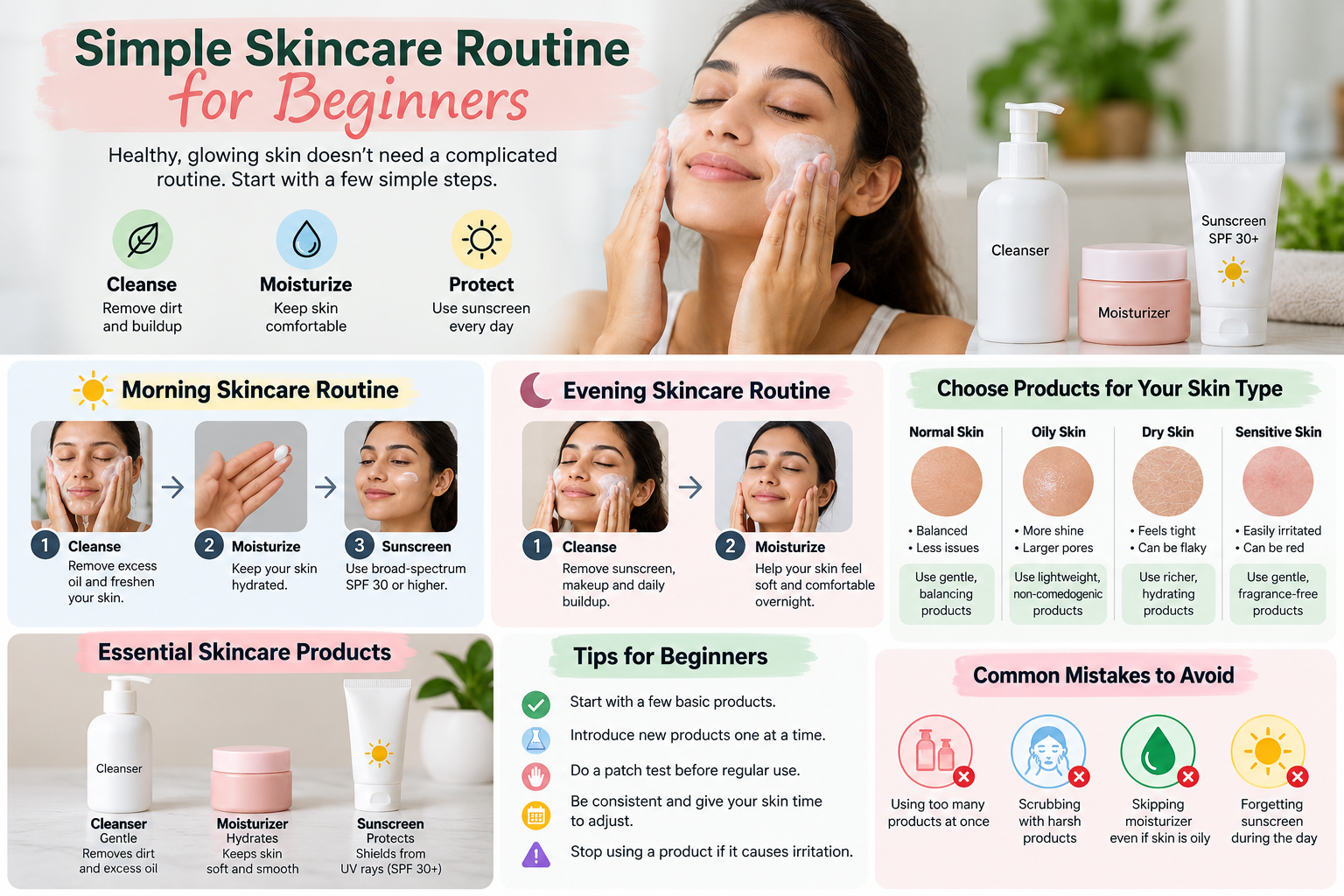
You can begin with this basic schedule:
Morning
- Gentle cleanser, or a water rinse if appropriate for your skin.
- Moisturizer.
- Broad-spectrum sunscreen, SPF 30 or higher.
Evening
- Gentle cleanser to remove sunscreen and daily buildup.
- Moisturizer.
That is enough for many beginners. You do not need to add several serums at once to have a useful routine.
Should Beginners Add Serums or Exfoliants?
Not necessarily. First, give your basic routine time to feel comfortable and manageable. If you later want to address a specific concern—such as uneven-looking skin tone or clogged pores—research an ingredient that fits that goal and introduce one new product at a time.
Keep these points in mind:
- Avoid starting multiple active ingredients at once.
- Follow product directions and avoid applying products to irritated or broken skin.
- Exfoliation is optional; frequent or harsh exfoliation can cause irritation.
- Stop using a product if it causes persistent burning, swelling, a rash or significant discomfort.
If you have a persistent skin concern, a history of reactions, or are unsure which ingredients are suitable, seek advice from a qualified skincare or healthcare professional.
If you’re thinking about adding serums, read our guide on whether niacinamide and vitamin C can be used together to understand how these ingredients may fit into a routine
How to Introduce New Products
When you add a product, try to keep the rest of your routine unchanged. This makes it easier to identify what works for you.
- Read the product label and use it as directed.
- Patch test according to the product instructions; a small-area test can help identify some reactions, though it cannot guarantee that a product will be irritation-free.
- Introduce one new product at a time.
- Give your skin time to adjust, while watching for discomfort or irritation.
If a reaction develops, stop using the new product. Seek medical advice for severe, persistent or worsening symptoms.
Common Beginner Skincare Mistakes
Using too many products at once: A complicated routine can be hard to maintain and makes it difficult to identify the cause of irritation.
Scrubbing the skin aggressively: Rough scrubbing can leave skin irritated. Gentle cleansing is usually enough.
Skipping moisturizer because your skin is oily: Oily skin may still benefit from hydration.
Forgetting sunscreen: Daytime sun protection is an important part of a routine, even when the weather is cloudy.
Expecting instant results: Skin care is not usually an overnight process. Focus on comfort, consistency and whether the products suit your skin rather than chasing quick changes.
Frequently Asked Questions
How many products does a beginner need?
Start with a cleanser, moisturizer and daytime sunscreen. You can add other products later if you have a specific need.
Should I follow the same routine every day?
A consistent, gentle routine is a useful starting point. You may adjust it based on how your skin feels, the weather, or whether you have been sweating or wearing sunscreen.
Can I use moisturizer if I have oily skin?
Yes. Choose a texture that feels comfortable and does not leave your skin feeling overly greasy. Oily skin can still experience dryness or dehydration.
When should I expect to notice a difference?
It depends on the product and your skin concern. Basic cleansing and moisturizing may improve comfort relatively quickly, while changes in specific concerns can take longer. Avoid increasing product use just to speed up results.
Final Thoughts
A beginner skincare routine does not have to be complicated. Start with gentle cleansing, moisturizer and daily sunscreen. Once those steps feel comfortable, you can decide whether your skin needs anything more.
The goal is not to use the most products—it is to find a simple routine that fits your skin and your everyday life.
Disclaimer: This article is for general informational purposes only and is not a substitute for professional skincare advice. Before trying any skincare product or changing your routine, consult a qualified skincare or healthcare professional to make sure it is suitable for your skin.
About Author


