
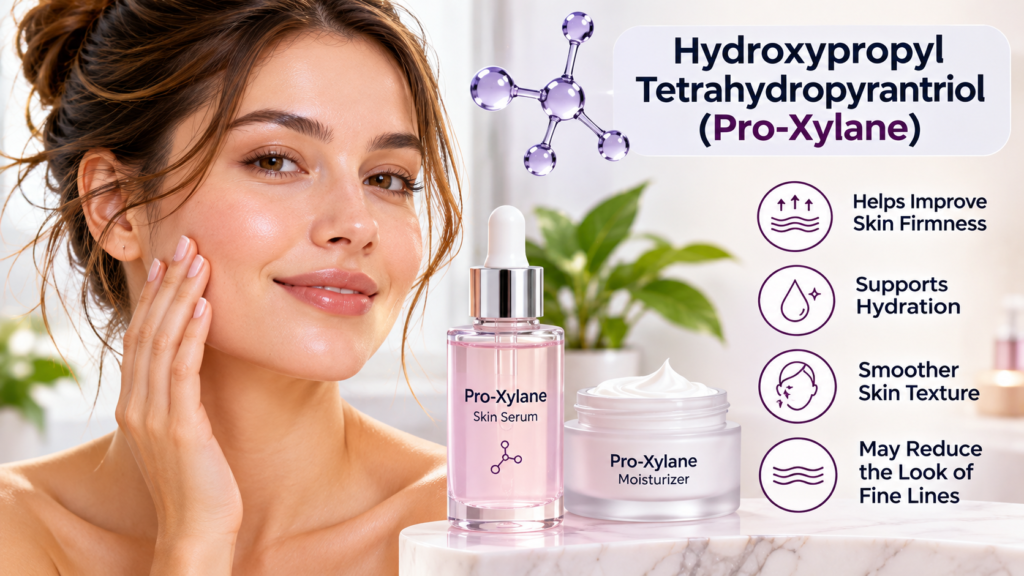

Skincare ingredients play an important role in maintaining healthy-looking skin. While ingredients such as hyaluronic acid, niacinamide and vitamin C are widely discussed, some lesser-known cosmetic ingredients are also attracting attention. One example is Hydroxypropyl Tetrahydropyrantriol, commonly known by its trade name, Pro-Xylane.
Pro-Xylane is used in certain skincare formulations marketed for hydration, skin texture and visible signs of ageing. It is particularly associated with products designed to improve the appearance of fine lines and support smoother-looking skin.
But what exactly is Hydroxypropyl Tetrahydropyrantriol? How does it work, what benefits may it offer, and are there any precautions to consider?
In this guide, we will explore its uses, potential skincare benefits, available research, possible side effects and how to include products containing this ingredient in a skincare routine.
What Is Hydroxypropyl Tetrahydropyrantriol?
Hydroxypropyl Tetrahydropyrantriol is a cosmetic ingredient commonly associated with the name Pro-Xylane. It is a synthetic sugar-derived compound used in skincare formulations, particularly products marketed for mature or ageing skin.
It is included in certain creams, serums and moisturising products because of its potential role in skin conditioning and the appearance of skin firmness and texture.
Pro-Xylane is often discussed in connection with the skin’s extracellular matrix, a network of substances that helps provide structural support to the skin. However, it is important to distinguish between laboratory research, studies on finished skincare formulations and proven results from using the ingredient on its own.
A product containing Pro-Xylane may also include other active ingredients, so its overall results cannot automatically be attributed to Pro-Xylane alone.
How Does Pro-Xylane Work in Skincare?
The skin’s extracellular matrix contains substances such as collagen, elastin and glycosaminoglycans. These components contribute to the skin’s structure, elasticity and ability to retain moisture.
Pro-Xylane has been studied for its potential interaction with processes related to the extracellular matrix. This is one reason it is used in cosmetic products designed for visible signs of ageing.
However, the presence of Pro-Xylane in a skincare product does not mean that it will rebuild damaged skin or reverse ageing.
Its effects depend on several factors, including:
- The concentration used in the formulation.
- Other ingredients included in the product.
- The overall formulation and product quality.
- How frequently and consistently the product is used.
- Individual skin characteristics.
For this reason, it is better to think of Pro-Xylane as a cosmetic ingredient that may contribute to the appearance of smoother and better-conditioned skin rather than a guaranteed anti-ageing treatment.
Potential Benefits of Hydroxypropyl Tetrahydropyrantriol for Skin
Pro-Xylane is included in skincare products for several cosmetic purposes. The potential benefits below should be understood in the context of the complete formulation rather than guaranteed results from the ingredient alone.
#1. Helps Improve the Appearance of Fine Lines
Fine lines can become more noticeable as skin changes with age, environmental exposure and reduced moisture levels.
Some Pro-Xylane-containing skincare products are formulated to improve the appearance of fine lines and wrinkles. Regular use of a suitable moisturising product may also make fine lines look less noticeable by improving the skin’s surface hydration.
However, results vary, and Pro-Xylane should not be considered a proven way to remove wrinkles permanently.
#2. Supports Smoother-Looking Skin
Uneven skin texture can make the face appear rough or less smooth. A well-formulated skincare product containing Pro-Xylane may help improve the appearance and feel of the skin.
The overall effect depends on the complete formula. Other moisturising and skin-conditioning ingredients may also contribute to the result.
#3. May Support the Appearance of Skin Firmness
Skin firmness is influenced by several factors, including collagen, elastin, age and environmental exposure.
Pro-Xylane has been investigated in relation to components of the extracellular matrix. Some research involving finished formulations containing Pro-Xylane has explored changes in visible skin characteristics.
However, evidence from combination formulations does not prove that Pro-Xylane alone increases collagen or produces a measurable lifting effect.
#4. Can Be Part of a Hydrating Skincare Routine
Pro-Xylane is found in some moisturizing and anti-ageing skincare products. These formulations may include ingredients such as glycerin, hyaluronic acid or other skin-conditioning agents.
Such combinations can help improve the skin’s moisturised appearance and reduce the feeling of dryness.
If your skin feels oily but tight or uncomfortable, you may also find it useful to understand the difference between oiliness and dehydration. Read our guide on Why Does My Skin Feel Oily but Also Dry?.
#5. Complements a Skincare Routine for Mature Skin
People concerned about visible signs of ageing often use products containing moisturising and skin-conditioning ingredients.
A Pro-Xylane-containing cream or serum may be one option within a broader routine. However, it should not replace basic skincare habits such as moisturising, gentle cleansing and daily sun protection.
What Does Scientific Research Say About Pro-Xylane?
Pro-Xylane has been investigated in cosmetic research, including studies involving skincare formulations designed for mature skin.
One published study examined a skincare complex containing Pro-Xylane in menopausal women. This is relevant because it provides research on a finished formulation and its effects on skin characteristics.
However, there is an important limitation: the study evaluated a product containing a combination of ingredients. Its findings should not be interpreted as proof that Pro-Xylane by itself produces every reported effect.
When evaluating claims about any skincare ingredient, consider the following:
- Was the study conducted on the ingredient alone or a finished product?
- How many people participated?
- How long did the study last?
- Were the results measured objectively?
- Was the research independently replicated?
This distinction helps prevent exaggerated skincare claims and makes it easier to choose products based on realistic expectations.
Who May Consider Using Pro-Xylane?
A skincare product containing Pro-Xylane may be worth considering if you are interested in:
- Products formulated for mature-looking skin.
- Moisturisers designed to improve skin comfort.
- Skincare products targeting the appearance of fine lines.
- Formulations containing multiple skin-conditioning ingredients.
It is not necessary for everyone to use Pro-Xylane. A simple routine with a gentle cleanser, suitable moisturiser and sunscreen can already provide an effective foundation for everyday skincare.
People with sensitive skin or a history of cosmetic reactions should review the complete ingredient list before purchasing a new product.
How to Use Pro-Xylane in Your Skincare Routine
If you decide to try a product containing Hydroxypropyl Tetrahydropyrantriol, follow the manufacturer’s directions and introduce it gradually.
Here is a simple routine to consider.
Morning Routine
Step 1: Cleanse your face
Use a gentle cleanser that suits your skin type. Avoid harsh cleansing products that leave your skin feeling tight or uncomfortable.
Step 2: Apply your Pro-Xylane product
If your chosen product is a serum or cream, apply it according to the packaging instructions. Use the recommended amount rather than applying several layers.
Step 3: Apply moisturiser
Use a suitable moisturiser to help maintain skin comfort and reduce moisture loss. Some Pro-Xylane products already contain moisturising ingredients, so you may not need an additional product.
Step 4: Finish with sunscreen
Apply a broad-spectrum sunscreen with SPF 30 or higher. Sun protection is an important part of a routine designed to reduce the visible effects of sun exposure.
Evening Routine
Step 1: Cleanse your face
Remove sunscreen, makeup, dirt and excess oil with a gentle cleanser.
Step 2: Apply your Pro-Xylane product
Follow the product instructions and avoid using more than the recommended amount.
Step 3: Moisturise
Finish with a moisturiser that suits your skin. This can help keep your skin comfortable overnight.
If you are unsure about the order in which to apply your skincare products, read our guide on What Order Should You Apply Skincare Products?.
For beginners, our Simple Skincare Routine for Beginners guide can also help you build a straightforward daily routine.
Can You Use Pro-Xylane with Other Skincare Ingredients?
Pro-Xylane may appear in formulations alongside other cosmetic ingredients. Whether you can combine separate products depends on their complete ingredient lists and instructions.
Pro-Xylane and Hyaluronic Acid
Hyaluronic acid is commonly used in skincare to help attract and retain water at the skin’s surface. A product containing both ingredients may offer complementary skin-conditioning benefits.
Check the product formulation and apply it according to the manufacturer’s instructions.
Pro-Xylane and Vitamin C
Vitamin C is commonly used in skincare products designed to improve the appearance of uneven skin tone and provide antioxidant benefits.
There is no general reason to assume that Pro-Xylane and vitamin C cannot be used together. However, the suitability of a combination depends on the specific products and your skin’s tolerance.
If you use vitamin C, introduce new products gradually. You can also read our guide on Can You Use Niacinamide and Vitamin C Together? for more information about combining skincare ingredients.
Pro-Xylane and Retinol
Retinol is a vitamin A derivative used in skincare products for concerns such as fine lines and uneven skin texture.
Some routines may include both retinol and Pro-Xylane-containing products. If you are new to retinol, introduce it slowly and follow its product instructions. Avoid adding several new active products at once.
If you experience persistent irritation, stop using the products and seek professional advice.
Possible Side Effects and Precautions
Not every skincare ingredient suits every person. Even products marketed for mature or sensitive skin can cause unwanted reactions.
A cream containing Hydroxypropyl Tetrahydropyrantriol has been associated with a published case report of allergic contact dermatitis. This does not establish that reactions are common, but it shows why individual tolerance matters.
Before using a new product, keep these precautions in mind:
- Check the ingredient list: Look for ingredients you have reacted to previously.
- Perform a patch test: Apply a small amount to a limited area according to the product directions and observe for a reaction.
- Introduce one product at a time: This makes it easier to identify which product may be causing irritation.
- Avoid broken or irritated skin: Do not apply new cosmetic products to damaged or inflamed areas unless advised by a qualified professional.
- Stop if a reaction develops: Discontinue use if you notice persistent redness, itching, swelling or discomfort.
A patch test can help identify some reactions, but it cannot guarantee that a product will never cause irritation or allergy.
Is Pro-Xylane Suitable for All Skin Types?
Pro-Xylane is used in different cosmetic formulations, but suitability depends on the complete product rather than one ingredient alone.
Dry skin: A moisturising formula containing Pro-Xylane and other hydrating ingredients may be worth considering.
Oily skin: Choose a lightweight formula that feels comfortable and does not leave your skin excessively greasy.
Combination skin: Consider a product that provides comfortable hydration without feeling too heavy.
Sensitive skin: Review the full ingredient list, especially fragrance and other ingredients that have irritated your skin in the past. Patch test before wider use.
If you experience frequent irritation or have an ongoing skin concern, seek guidance from a qualified skincare or healthcare professional before changing your routine.
Conclusion
Hydroxypropyl Tetrahydropyrantriol, commonly known as Pro-Xylane, is an ingredient used in certain cosmetic formulations designed for skin conditioning and visible signs of ageing.
It has attracted interest because of its potential relationship with the skin’s extracellular matrix. However, the available research should be interpreted carefully, especially when studies evaluate complete formulations containing multiple ingredients rather than Pro-Xylane alone.
If you want to try a product containing this ingredient, check its full formulation, follow the manufacturer’s instructions and introduce it gradually. A consistent skincare routine, suitable moisturiser and daily sunscreen remain important parts of maintaining healthy-looking skin.
Frequently Asked Questions
Q1. What is Hydroxypropyl Tetrahydropyrantriol used for?
Hydroxypropyl Tetrahydropyrantriol, also known as Pro-Xylane, is used in cosmetic products formulated for skin conditioning and the appearance of fine lines, skin texture and firmness.
Q2. Is Pro-Xylane the same as Hydroxypropyl Tetrahydropyrantriol?
Yes. Pro-Xylane is the commonly used name associated with the cosmetic ingredient Hydroxypropyl Tetrahydropyrantriol.
Q3. Does Pro-Xylane increase collagen production?
Pro-Xylane has been studied in relation to the skin’s extracellular matrix. However, research involving finished formulations does not establish that the isolated ingredient directly increases collagen production in human skin.
Q4. Can Pro-Xylane reduce wrinkles?
Some skincare products containing Pro-Xylane are marketed for improving the appearance of fine lines and wrinkles. Results depend on the complete formulation and individual skin characteristics. It should not be considered a permanent wrinkle-removal treatment.
Q5. Is Pro-Xylane safe for sensitive skin?
It may be tolerated by some people, but no cosmetic ingredient is guaranteed to suit everyone. Review the complete formula and perform a patch test before use. Stop using the product if irritation develops.
Q6. Can I use Pro-Xylane every day?
The frequency depends on the specific product. If its instructions permit daily use and your skin tolerates it, you can follow the recommended routine. Start gradually when introducing a new product.
Q7. Can Pro-Xylane remove dark spots?
There is not enough evidence to claim that Pro-Xylane alone removes dark spots or treats pigmentation. If uneven skin tone is your main concern, consider products with ingredients supported for that purpose and use daily sun protection.
Q8. How long does Pro-Xylane take to show results?
There is no universal timeline for results. It depends on the product formulation, frequency of use and individual skin characteristics. Follow the product directions and avoid expecting overnight changes.
References
- Clinical study: A Compensating Skin Care Complex Containing Pro-Xylane in Menopausal Women
- PubMed: Contact Dermatitis Associated with Hydroxypropyl Tetrahydropyrantriol
- FDA Substance Registration System: Hydroxypropyl Tetrahydropyrantriol
Disclaimer
This article is for general informational purposes only and is not a substitute for professional skincare advice. Before trying any skincare product or changing your routine, consult a qualified skincare or healthcare professional to make sure it is suitable for your skin.
About Author


