
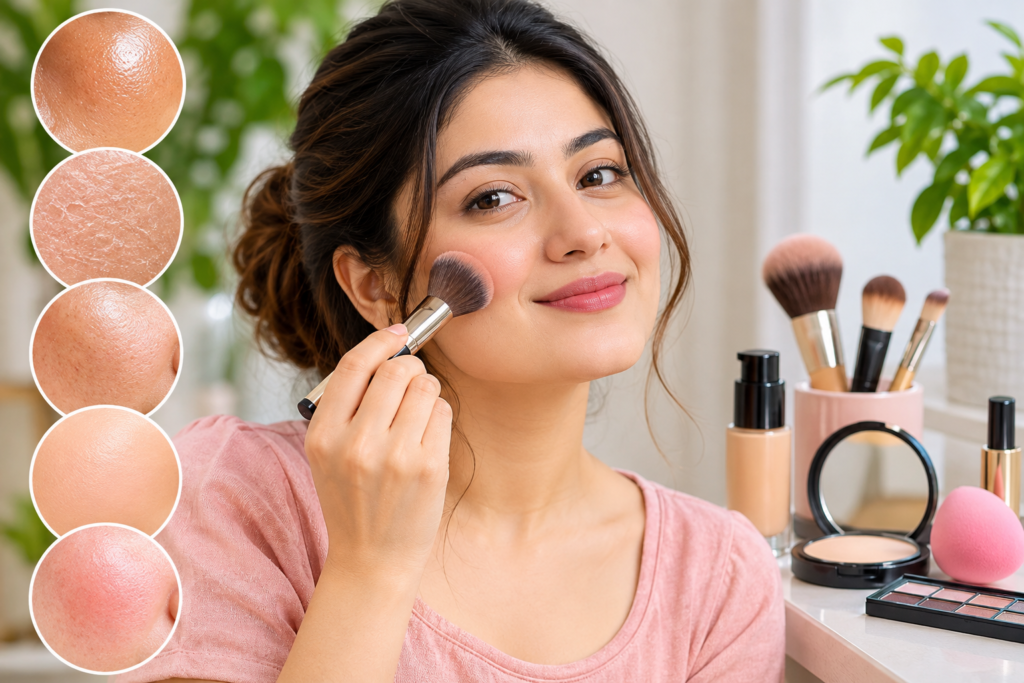

Nobody wants cakey makeup, especially on a special occasion. But does every makeup product work for every skin type? No. Every person’s skin is different, and some products may work well for dry skin while others are more suitable for oily skin.
Sometimes you buy a product, such as a foundation, because it looks beautiful on someone else. But when you try it yourself, it does not suit your skin. So, who is at fault here: your skin or the product? Neither. The reason is that certain ingredients or formulas may not suit your skin type.
Some people deal with excess oil, while others have extremely dry skin. The same makeup product may not give everyone the same result.
The key is to understand your skin type before buying makeup. Once you know your skin’s needs, choosing suitable products becomes much easier. Let’s take a look at how you can select makeup for your skin type without making the process complicated.
Understanding Your Skin Before Applying Makeup
Your skin type plays an important role when choosing makeup products. Understanding your skin before buying cosmetics can help you avoid products that may not feel comfortable or give you the finish you want.
Generally, skin is divided into five types:
- Oily Skin: Oily skin produces more sebum, which often leaves the face looking shiny. People with oily skin may also experience clogged pores and breakouts. If you regularly notice excess shine around your forehead, nose and chin, you may have oily skin.
- Dry Skin: If your skin feels tight, uncomfortable or rough, you may have dry skin. Sometimes it can become extremely dry and flaky. These dry patches may become more noticeable when you apply makeup.
- Combination Skin: As the name suggests, combination skin has both oily and dry areas. Your forehead, nose and chin may become oily, while your cheeks may feel dry. Because of this, you may need to use different products on different areas of your face.
- Normal Skin: Normal skin is generally neither too oily nor too dry. People with this skin type may have more flexibility when choosing makeup products, although product suitability and personal preference still matter.
- Sensitive Skin: Sensitive skin tends to react more easily to certain ingredients or cosmetic products. People with sensitive skin should choose makeup carefully and test new products before using them regularly.
Understanding your skin type is also important when building a basic skincare routine. Read our guide on Simple Skincare Routine for Beginners to learn how to care for your skin before applying makeup.
Makeup for Different Skin Types
As we know, not every makeup product works equally well for everyone. Now that we have a basic understanding of different skin types, let’s see how to choose makeup products that complement your skin.
Makeup for Oily Skin
Oily skin tends to become greasy throughout the day, even if it looks fresh immediately after washing. When you apply makeup, excess oil may make your face look shiny. You may also notice that foundation starts separating or that your T-zone becomes oily just a few hours after application.
If you have oily skin, here are some tips you can follow:
- Choose a suitable primer: A lightweight or gel-based primer may feel comfortable on oily skin. You can also consider a mattifying primer if you want to reduce the appearance of excess shine.
- Select the right foundation: Look for oil-free or non-comedogenic foundation formulas with a matte or natural finish.
- Avoid too many layers: Applying unnecessary layers of makeup can make your face look heavy and cakey. Start with a small amount and build coverage gradually.
- Use setting powder carefully: A little translucent powder on oily areas can help reduce shine. Avoid applying too much, as it may make your makeup look heavy.
Sometimes, skin may feel oily but still lack enough moisture. Learn more in our guide on Oily but Dehydrated Skin to understand the difference.
Makeup for Dry Skin
Extremely dry skin can develop flaky patches, which may make applying makeup more difficult. When the skin lacks moisture, foundation can settle into fine lines and highlight dry areas, creating an uneven finish.
To get a smoother-looking makeup finish, consider these tips:
- Moisturize before makeup: Use a moisturizer that suits your skin and allow it to settle properly before applying foundation.
- Choose a hydrating primer: A hydrating primer may help create a more comfortable base for makeup.
- Try liquid foundation: Liquid or cream foundations with a hydrating or satin finish may work well for dry skin.
- Avoid too much setting powder: Powder is useful for setting makeup, but excessive application can make flaky areas more noticeable.
- Choose comfortable formulas: If your skin is sensitive to fragrance, fragrance-free makeup products may be a better option.
Try not to apply too much product to your face. Use only the amount you need to achieve your preferred coverage.
Makeup for Combination Skin
Combination skin can be a little tricky to manage because some areas of your face are oily while others are dry. It is important not to treat your entire face as if it has the same needs.
You can use different products on different areas of your face according to how your skin feels.
Some products are specifically designed for combination skin, but you do not necessarily need to buy separate products for every area. A foundation with a natural or satin finish can be a good starting point.
You can also follow these tips:
- Use a lightweight primer on oily areas if needed.
- Apply a hydrating product to dry areas before makeup.
- Use a small amount of translucent powder on the T-zone.
- Avoid applying too much powder to your cheeks if they tend to become dry.
Remember, balance is important for combination skin. Instead of treating every part of your face in the same way, adjust your makeup according to the needs of each area.
Makeup for Normal Skin
People with normal skin generally have more flexibility when choosing makeup products. You can experiment with different formulas and finishes to find what suits your preferences.
If you want an everyday look, you can use a lightweight foundation or skin tint for natural-looking coverage. For a festive occasion or special event, you may prefer a liquid foundation that provides more coverage.
Even if you have normal skin, do not skip your basic skincare routine. Cleansing and moisturizing help keep your skin comfortable before and after applying makeup.
If your current products suit your skin, there is no need to keep experimenting with new formulas unnecessarily.
Makeup for Sensitive Skin
Sensitive skin can be tricky when choosing makeup products, so it is important to pay extra attention to ingredients and product suitability.
Not every product labelled herbal, natural or organic is automatically suitable for your skin. Avoid buying products blindly just because they are promoted as natural or recommended by someone else.
Keep these points in mind:
- Test new products carefully: Follow the manufacturer’s instructions for testing a new cosmetic on a small area of skin. A small-area test cannot guarantee that a product will never cause a reaction.
- Check the ingredient list: Pay attention to ingredients that have caused irritation for you in the past.
- Choose fragrance-free products: If fragrance irritates your skin, fragrance-free cosmetics may be a more comfortable option.
- Keep makeup tools clean: Make sure your brushes and sponges are clean before applying makeup. Dirty tools can collect oil, makeup residue and microorganisms, which may contribute to skin irritation.
If a product causes persistent itching, redness, burning or swelling, stop using it.
Common Makeup Mistakes You Should Avoid
If you are a beginner, it is normal to make mistakes while learning how to apply makeup. Sometimes, the problem is not the product itself but the way it is applied.
Here are some common makeup mistakes you should try to avoid:
- Using too much foundation: Applying several thick layers of foundation will not necessarily provide a better finish. It may make your makeup look cakey and heavy.
- Choosing products without considering your skin type: A product that works for someone else may not work equally well for you. Understand your skin’s needs before buying makeup.
- Skipping moisturizer: Even oily skin needs hydration. Skipping moisturizer may leave your skin feeling uncomfortable and can affect how makeup sits on your face.
- Applying skincare products in the right sequence can also help prepare your skin for makeup. Read our guide on What Order to Apply Skincare Products
- Applying too much powder: Excessive setting powder can make dry areas look flaky. Apply only the amount you need.
- Ignoring product ingredients: If you have sensitive or acne-prone skin, check the ingredient list and choose products that suit your skin.
- Sleeping with makeup on: After a long day, removing makeup may feel like an extra task. However, leaving makeup on overnight can contribute to clogged pores and irritation in some people. Always remove your makeup gently before going to bed.
How to Make Your Makeup Last Longer
Good makeup should feel comfortable throughout the day. Although no product can guarantee that makeup will remain perfect for a specific number of hours, a few simple habits can help improve its appearance and wear time.
Here are some tips you can follow:
- Prepare your skin before applying makeup.
- Use a primer if your skin or makeup routine benefits from it.
- Apply foundation in thin, even layers.
- Allow cream products to settle before applying powder products.
- Use setting powder only where necessary.
- Finish with a setting spray if you prefer.
- Avoid touching your face frequently throughout the day.
Remember that makeup wear time also depends on your skin type, the products you use, weather conditions and your daily activities.
Conclusion
Makeup is not about hiding your face or achieving perfection. It is about enhancing your features and choosing cosmetic products that suit your skin.
A makeup routine is not the same for everyone. What matters is understanding your own skin and selecting products that make you feel comfortable and confident.
Do not blindly use products on your face just because they are popular or recommended by someone else. If you experience a persistent skin reaction, seek advice from a qualified skincare or healthcare professional.
You do not need an expensive collection of makeup products to achieve a good look. Start with a few suitable products, learn how your skin responds to them and build your routine gradually. After all, the best makeup is the one that works with your skin rather than against it.
FAQs.
Q1. How do I know which makeup suits my skin type?
Start by understanding your skin type. Then choose makeup products according to your skin’s needs and preferred finish. Test new products carefully before using them regularly.
Q2. Can people with sensitive skin use makeup every day?
Yes. People with sensitive skin can use makeup regularly if they choose suitable products that do not irritate their skin. Fragrance-free formulas may be a comfortable option for those who are sensitive to fragrance.
Q3. Is primer necessary for every skin type?
No, primer is optional. It may help reduce the appearance of excess shine, improve the look of skin texture or help makeup wear longer. However, you can achieve a good makeup look without using primer.
Q4. How can I stop my makeup from looking cakey?
Use moisturizer before makeup, apply foundation in thin layers and build coverage gradually. Avoid applying too much setting powder, especially on dry areas.
Q5. Which is better: dewy or matte foundation?
It depends on your skin type and personal preference. People with oily skin may prefer a matte finish to reduce the appearance of shine, while those with dry skin may prefer a hydrating or dewy finish. Choose a formula that feels comfortable and gives you the look you want.
References
- American Academy of Dermatology – Skin Care Basics
- American Academy of Dermatology – How to Test Skin Care Products
- U.S. Food and Drug Administration – Cosmetics
Disclaimer: This article is for general informational purposes only and is not a substitute for professional skincare advice. Before trying any skincare product or changing your routine, consult a qualified skincare or healthcare professional to make sure it is suitable for your skin.
About Author


