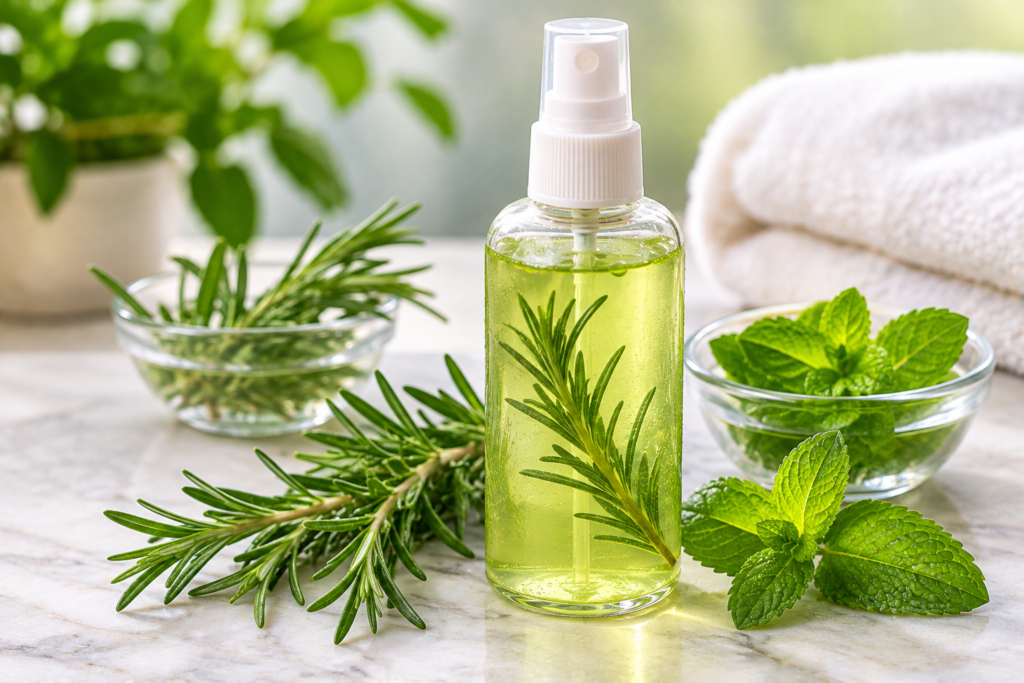

A simple skincare routine does not always need a long list of products. While cleansers, moisturisers and serums can play an important role in daily skincare, some people also enjoy exploring simple homemade preparations using ingredients found in their kitchens or gardens.
Rosemary and mint are two aromatic herbs often used in homemade beauty recipes. Their fresh fragrance makes them appealing ingredients for a DIY face toner. However, natural ingredients are not automatically suitable for every skin type, and a homemade herbal toner does not have the same testing or preservation system as a commercially formulated skincare product.
If you are curious about making a rosemary and mint toner at home, this guide explains the ingredients, preparation method, possible benefits and precautions you should understand before trying it.
What Are Rosemary and Mint?
Rosemary and mint are aromatic herbs commonly used in cooking and traditional home preparations. Both have a refreshing fragrance, which is one reason they are popular in DIY skincare recipes.
Rosemary
Rosemary is an aromatic herb known for its distinctive fragrance. It contains naturally occurring plant compounds, including rosmarinic acid and other antioxidant compounds.
These substances have been studied for their antioxidant properties. However, that does not mean a homemade rosemary water toner has been proven to prevent wrinkles, remove dark spots or reverse skin ageing.
Mint
Mint is known for its fresh aroma and cooling sensation. It contains naturally occurring compounds, including menthol in some varieties.
Mint can feel refreshing when used in suitable cosmetic formulations. However, menthol and other mint-related compounds may irritate sensitive skin, particularly when concentrated or used in unsuitable preparations.
For this reason, it is important to be cautious when applying homemade herbal mixtures to your face.
Possible Benefits of a Rosemary and Mint Face Toner
A homemade rosemary and mint infusion may appeal to people who enjoy simple, fragrance-rich skincare preparations. However, its benefits should not be exaggerated.
Here are a few realistic points to consider.
1. A Refreshing Addition to Your Routine
The herbal aroma of rosemary and mint can make this preparation feel refreshing. Some people enjoy using a light facial mist or toner after cleansing, although this is a personal preference rather than a necessary skincare step.
2. Contains Naturally Occurring Plant Compounds
Rosemary and mint contain different plant compounds that have been studied in laboratory and other research settings. However, evidence about individual plant extracts does not establish that a homemade herbal infusion delivers the same effects to human skin.
3. A Simple DIY Skincare Experiment
Preparing an herbal infusion can be an interesting way to explore homemade skincare. It also gives you control over which ingredients you add.
Remember that a homemade preparation is not automatically safer than a professionally formulated product. Ingredient quality, concentration, cleanliness and storage all matter.
Does It Control Oil, Remove Makeup or Prevent Breakouts?
There is not enough reliable clinical evidence to claim that this particular homemade rosemary and mint toner controls sebum production, removes makeup, prevents acne or provides lasting hydration.
A toner should not replace a proper facial cleanser, moisturiser or acne treatment. If your main concern is excess oil or breakouts, choose products formulated for your skin needs rather than relying on an untested homemade recipe.
Ingredients Required for Rosemary and Mint Face Toner
The original recipe uses the following ingredients:
½ cup fresh rosemary leaves
½ cup fresh mint leaves
1 cup distilled water
About witch hazel: The original recipe also mentions witch hazel. I recommend leaving it out of this homemade version. Some witch hazel products contain alcohol or other ingredients that can irritate or dry the skin. It is also not a substitute for a proper cosmetic preservative.
Use clean, fresh herbs and distilled water. Do not use herbs that appear mouldy, damaged or contaminated.
How to Prepare Rosemary and Mint Infusion
This is a simple herbal water infusion. It is not a professionally preserved cosmetic toner, so it should be treated as a short-lived homemade preparation.
Step 1: Wash the Herbs
Rinse the rosemary and mint leaves thoroughly under clean running water to remove visible dirt and debris.
Step 2: Prepare the Leaves
Gently chop the leaves into smaller pieces. There is no need to grind them into a paste.
Step 3: Heat the Distilled Water
Pour one cup of distilled water into a clean saucepan and bring it to a boil.
Step 4: Add Rosemary and Mint
Turn off the heat and add the prepared leaves to the hot water.
Step 5: Allow the Herbs to Steep
Cover the saucepan and leave the leaves in the hot water for approximately 15–20 minutes.
Step 6: Strain the Mixture
Allow the infusion to cool, then strain it through a clean, fine-mesh strainer to remove the leaves.
Step 7: Cool and Transfer
Once completely cool, transfer a small amount into a thoroughly cleaned container. Avoid touching the liquid with your fingers.
Important: This preparation has no validated preservative system or tested shelf life. The safest approach is to prepare only the amount needed for immediate use and discard any leftover mixture. Refrigeration does not make a homemade water-based product sterile or guarantee that it will remain safe.
How to Use Rosemary and Mint Face Toner
If you decide to try this preparation, take a cautious approach.
Start with clean skin. Wash your face using a gentle cleanser.
Apply a small amount of the cooled preparation to a clean cotton pad.
Gently dab a small area of skin. Avoid rubbing.
Do not apply it near your eyes, lips or broken skin.
Stop immediately if you experience burning, itching, redness or discomfort.
A toner is an optional step. You do not need one to maintain healthy-looking skin.
For a more complete routine, read our guide on Simple Skincare Routine for Beginners. You can also learn What Order to Apply Skincare Products to understand where a toner fits into a routine.
Precautions Before Using Homemade Herbal Toner
Natural ingredients can still cause irritation or allergic reactions. Before trying a new preparation, keep these precautions in mind.
#1. Patch Test First
Apply a small amount to a limited area of skin and monitor for a reaction. The American Academy of Dermatology recommends testing skincare products on a small area twice daily for 7–10 days before regular use.
A home patch test cannot guarantee that a reaction will never occur, but it can help identify some problems before wider application.
Read our guide on How to Patch Test Skincare Products if it is available on the website.
#2. Avoid Essential Oils in This Recipe
Do not add concentrated rosemary or peppermint essential oil to this water-based infusion. Essential oils are different from herbal leaves steeped in water and can cause irritation if used incorrectly.
#3. Be Careful If You Have Sensitive Skin
If your skin is easily irritated, or you have eczema, rosacea or an active rash, avoid experimenting with homemade herbal preparations without getting appropriate professional advice.
#4. Maintain Cleanliness
Use clean utensils and containers when preparing the infusion. Do not dip used cotton pads or fingers into the mixture.
#5. Do Not Store It Like a Commercial Toner
Commercial skincare products are formulated and tested for stability and microbial safety. A homemade infusion does not have the same protection.
Do not make a large batch for daily use. Prepare only what you need and discard leftovers rather than trying to extend their shelf life.
Is Rosemary and Mint Face Toner Suitable for Every Skin Type?
No. Different skin types can respond differently to botanical ingredients.
Oily skin: A homemade toner has not been proven to regulate oil production. A gentle cleanser and suitable moisturiser are more dependable choices.
Dry skin: The infusion is not a substitute for a moisturiser that helps reduce water loss.
Sensitive skin: Mint-related compounds and other botanical ingredients may trigger irritation.
Combination skin: Different areas of the face may respond differently, so introducing unfamiliar ingredients requires caution.
If your current routine is working well, there is no need to add a homemade toner just because it is made with natural ingredients.
FAQs.
Q1. Can I use rosemary and mint toner every day?
There is no established evidence-based daily-use recommendation for this homemade preparation. Since it is unpreserved and may irritate some skin types, it is better not to make it a regular daily skincare product.
Q2. Can rosemary and mint toner remove dark spots?
There is no reliable clinical evidence that this homemade infusion removes dark spots or treats hyperpigmentation. Sun protection and suitable skincare ingredients are more established approaches to managing uneven skin tone.
Q3. Can I add witch hazel to rosemary and mint toner?
It is better to leave witch hazel out of this recipe. Some formulations contain alcohol or other ingredients that may irritate sensitive skin. Adding it also does not provide a validated preservation system.
Q4. Can I use peppermint essential oil instead of fresh mint leaves?
No. Essential oils are highly concentrated and are not interchangeable with fresh mint leaves. Do not add undiluted peppermint essential oil to a homemade facial preparation.
Q5. Does this toner moisturise the skin?
The water-based infusion may temporarily leave the skin feeling fresh, but it has not been shown to provide lasting moisturisation. Use a suitable facial moisturiser after cleansing.
Q6. Can I keep homemade rosemary and mint toner for a week?
I would not recommend keeping this homemade water-based preparation for a week. It has no tested preservation system, and refrigeration cannot guarantee protection from microbial contamination. Prepare only a small amount for immediate use and discard the rest.
Conclusion:
Rosemary and mint make an interesting combination for a homemade herbal infusion, particularly if you enjoy experimenting with simple DIY skincare recipes. However, it is important to separate traditional beauty practices from proven skincare benefits.
This preparation should not be expected to control oil, prevent acne, remove makeup or reverse skin ageing. It also lacks the preservation and safety testing found in properly formulated commercial products.
If you prefer a simple skincare routine, focus on gentle cleansing, suitable moisturising and daily sun protection. Introduce new ingredients cautiously and pay attention to how your skin responds.
Medical and Safety References
American Academy of Dermatology – How to Test Skin Care Products
U.S. Food and Drug Administration – Small Businesses and Homemade Cosmetics
U.S. Food and Drug Administration – Microbiological Safety and Cosmetics
Disclaimer: This article is for general informational purposes only and is not a substitute for professional skincare advice. Before trying any skincare product or changing your routine, consult a qualified skincare or healthcare professional to make sure it is suitable for your skin.
About Author