
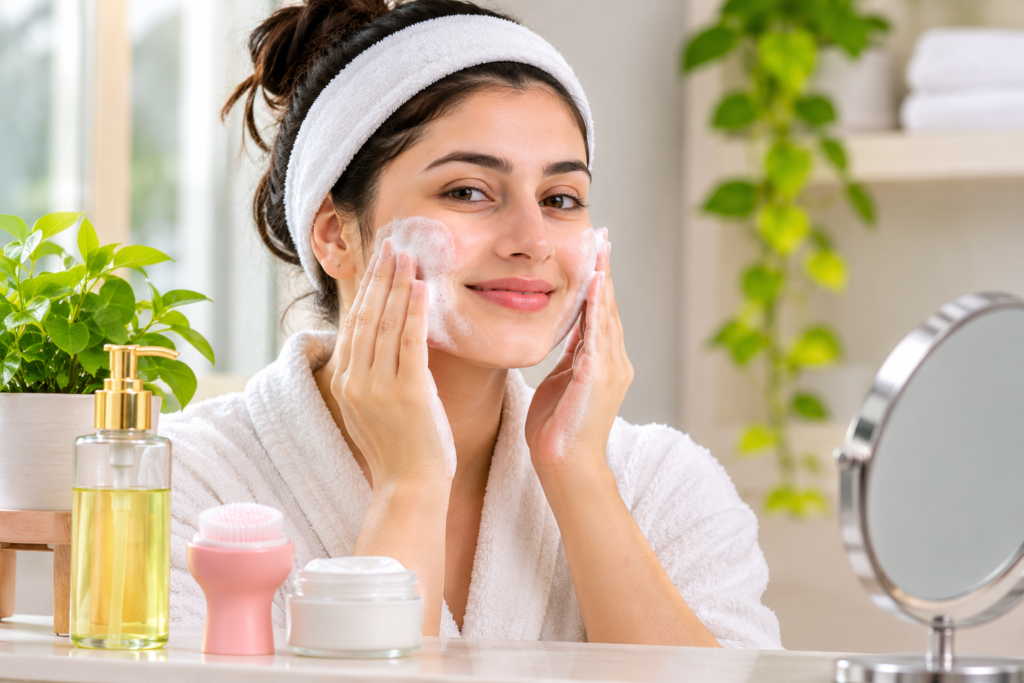

Taking care of your face does not always mean buying expensive creams or following a complicated skincare routine. In many cases, healthy-looking skin starts with simple daily habits and avoiding things that can cause unnecessary irritation.
From sleeping with makeup on to squeezing pimples and using too many skincare products, some common habits can affect the way your skin looks and feels. You may not notice the effects immediately, but repeating these habits can contribute to breakouts, dryness, irritation and other skin concerns.
The good news is that small changes can make your skincare routine more manageable. Here are six everyday habits worth avoiding if you want to take better care of your facial skin.
#1. Sleeping Without Removing Your Makeup
After a long and tiring day, removing makeup may feel like an extra task. However, going to bed without cleansing your face is not a good habit.
Makeup, sunscreen, excess oil and everyday dirt can remain on your skin throughout the night. Leaving makeup on while sleeping can contribute to clogged pores and breakouts, even when the makeup is labelled non-comedogenic.
What should you do instead?
- Remove makeup before going to bed.
- Use a gentle makeup remover suitable for your skin.
- Follow with a mild facial cleanser.
- Avoid rubbing or scrubbing your face aggressively.
If you wear makeup regularly, choose products labelled non-comedogenic or “won’t clog pores” when possible.
#2. Picking or Squeezing Pimples
A pimple can be tempting to squeeze, especially when it appears before an important occasion. However, picking or squeezing breakouts can make the inflammation worse.
It may push material deeper into the skin, increase irritation and raise the risk of noticeable marks or scarring.
What should you do instead?
- Avoid touching or squeezing active pimples.
- Cleanse your face gently.
- Consider suitable acne products rather than trying to remove pimples manually.
- Avoid applying toothpaste, lemon juice or other irritating household ingredients to breakouts.
If you experience painful, persistent or recurring acne, seek advice from a qualified healthcare professional.
#3. Scrubbing Your Face Too Hard
Some people believe that rubbing the face harder will remove more dirt and make the skin cleaner. In reality, aggressive scrubbing can irritate the skin and make existing skin concerns worse.
Rough washcloths, abrasive scrubs and excessive rubbing may leave your face feeling dry, uncomfortable or sensitive.
What should you do instead?
- Choose a gentle, non-abrasive facial cleanser.
- Wash with lukewarm water rather than hot water.
- Apply cleanser using your fingertips.
- Pat your face dry with a clean, soft towel.
You do not need to scrub your face to keep it clean. Gentle and consistent cleansing is usually a better approach.
#4. Using Too Many Skincare Products at Once
Trying several new skincare products together may seem like a quick way to improve your complexion. However, combining too many products or active ingredients can increase the chance of irritation.
For example, using multiple exfoliating products or introducing several strong ingredients at the same time may leave your skin red, dry or uncomfortable.
What should you do instead?
- Keep your routine simple.
- Introduce one new product at a time.
- Follow the instructions on product labels.
- Avoid combining multiple strong exfoliating products without understanding how they work together.
- Stop using a product if it causes persistent irritation.
For a simple starting point, read our guide to a Simple Skincare Routine for Beginners.
You can also learn What Order to Apply Skincare Products to understand how to organise your routine.
#5. Sharing Makeup and Using Dirty Makeup Brushes
Sharing makeup with friends or family may seem harmless, but it is not a good hygiene practice.
Makeup products, brushes and applicators can collect oil, product residue and microorganisms. Sharing them may transfer these contaminants between people and increase the risk of skin problems or eye infections.
Dirty makeup brushes can also collect residue and dirt over time.
What should you do instead?
- Avoid sharing mascara, lipstick, foundation and other personal makeup products.
- Clean makeup brushes regularly.
- Wash makeup sponges after use according to their care instructions.
- Store makeup products in a clean, dry place.
- Check product expiry dates and discard products that have changed in smell, texture or appearance.
Keeping your makeup tools clean is a simple habit that can support better skin and personal hygiene.
#6. Skipping Sunscreen During the Day
Sunscreen is an important part of everyday skincare. Ultraviolet (UV) exposure can contribute to sunburn, premature skin ageing, dark spots and an increased risk of skin cancer.
Some people apply sunscreen only during summer or when spending several hours outdoors. However, UV exposure can also occur during ordinary daily activities.
What should you do instead?
- Choose a broad-spectrum sunscreen with SPF 30 or higher.
- Apply it to exposed skin before going outdoors.
- Reapply approximately every two hours when outdoors, and after swimming or sweating, following the product instructions.
- Use additional protection such as sunglasses, hats, protective clothing and shade.
Sunscreen should be part of a consistent sun protection routine, not just an occasional skincare product.
Build Better Habits for Healthier-Looking Skin
You do not need an expensive collection of skincare products to take care of your face. Start with a few practical habits: remove makeup before bed, avoid squeezing pimples, cleanse gently, introduce products gradually, keep makeup tools clean and protect your skin from the sun.
Remember that everyone’s skin is different. A routine that works well for one person may not suit someone else. Pay attention to how your skin responds and make changes gradually.
For more practical guidance, explore our skincare articles and choose a routine that suits your individual skin needs.
FAQs.
Q1. Is sleeping with makeup on bad for your skin?
Sleeping with makeup on can contribute to clogged pores and breakouts. It is better to remove makeup and gently cleanse your face before going to bed.
Q2. Does squeezing pimples leave marks?
Picking or squeezing pimples can increase inflammation and raise the risk of noticeable marks and scarring. Avoid touching active breakouts whenever possible.
Q3. How often should I wash my face?
For many people, washing the face in the morning and before bed is sufficient. You may also need to cleanse after heavy sweating. If your skin is dry or sensitive, adjust your routine to avoid irritation.
Q4. Can using too many skincare products damage the skin?
Using too many products, particularly several strong active ingredients together, can cause dryness, redness and irritation. A simple routine is often easier to maintain.
Q5. Should I wear sunscreen every day?
Daily sun protection is a useful habit. Choose a broad-spectrum sunscreen with SPF 30 or higher and combine it with shade and protective clothing when appropriate.
Medical References
The following resources provide additional information about common skincare habits, makeup hygiene, gentle cleansing and sun protection.
- American Academy of Dermatology – 10 Skin Care Habits That Can Worsen Acne
https://www.aad.org/public/diseases/acne/skin-care/habits-stop - American Academy of Dermatology – How to Clean Your Makeup Brushes
https://www.aad.org/public/everyday-care/skin-care-secrets/routine/clean-your-makeup-brushes - American Academy of Dermatology – Face Washing 101
https://www.aad.org/public/everyday-care/skin-care-basics/care/face-washing-101 - American Academy of Dermatology – 6 Skin Care Tips for a Lifetime of Healthier Skin
https://www.aad.org/public/public-health/awareness-campaigns/national-healthy-skin-month
Disclaimer: This article is for general informational purposes only and is not a substitute for professional skincare advice. Before trying any skincare product or changing your routine, consult a qualified skincare or healthcare professional to make sure it is suitable for your skin.
About Author


