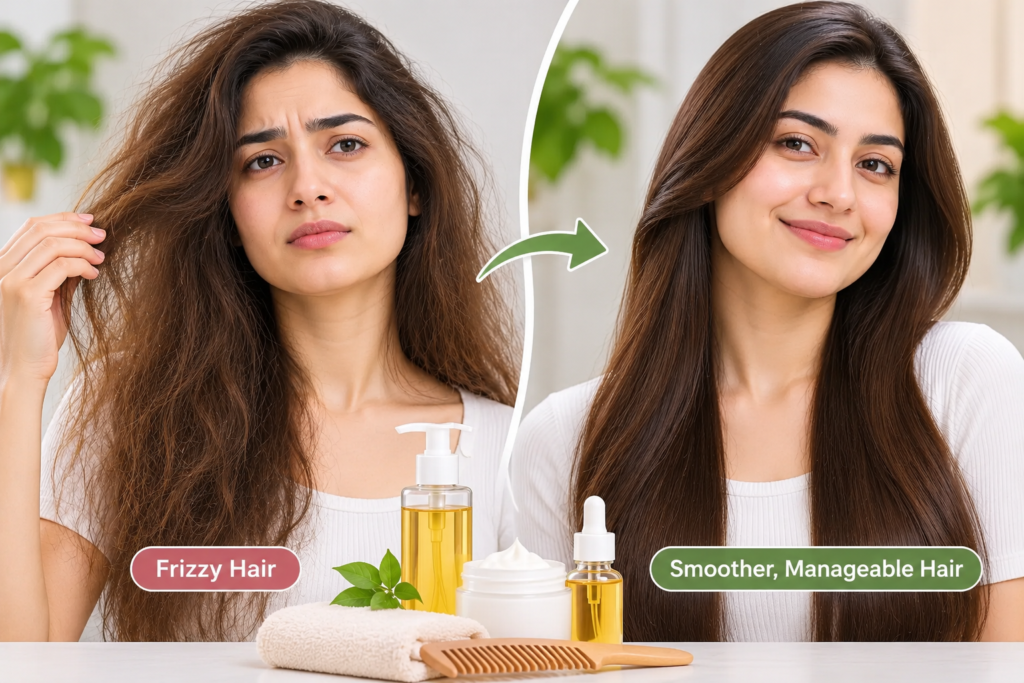

Frizzy hair can make even a simple hairstyle difficult to manage. You may notice your hair becoming rough, puffy or difficult to comb, especially during humid weather. Sometimes, it looks smooth after washing but becomes frizzy as it dries.
The good news is that you do not always need expensive salon treatments to manage frizz. Choosing suitable hair care products, reducing heat damage and following a consistent routine can make your hair easier to manage.
If you are wondering how to manage frizzy hair, this guide explains the common causes, practical hair care tips and available treatment options, including keratin treatment for frizzy hair.
What Causes Frizzy Hair?
Frizz usually occurs when the outer surface of the hair becomes rough or raised, allowing moisture from the surrounding air to affect the hair. It can make individual strands look uneven, dry or puffy.
Here are some common reasons behind frizzy hair:
1. Lack of Moisture
Dry hair can become rough and difficult to manage. When hair does not retain enough moisture, its strands may look dull and frizzy.
2. Humidity
Humidity is a common reason for frizz, particularly for people with naturally wavy, curly or textured hair. Hair can absorb moisture from humid air, causing strands to swell and change shape.
3. Excessive Heat Styling
Frequent use of hair dryers, straighteners and curling irons can damage the hair’s outer layer. Over time, this may contribute to dryness, breakage and frizz.
4. Rough Hair Handling
Brushing aggressively, rubbing wet hair with a towel and using tight hairstyles can cause unnecessary friction and breakage.
5. Chemical Treatments
Frequent colouring, bleaching, relaxing and straightening treatments can weaken hair and make it more difficult to manage.
10 Effective Ways to Manage Frizzy Hair
You can improve the appearance and manageability of frizzy hair by making a few changes to your regular hair care routine.
1. Choose a Gentle Shampoo
Start with a shampoo that suits your scalp and hair type. A harsh or unsuitable shampoo may leave your hair feeling dry and rough.
If your hair is naturally dry, curly or thick, consider a moisturizing shampoo. If your scalp becomes oily quickly, choose a gentle shampoo designed for your scalp needs.
Apply shampoo mainly to your scalp instead of repeatedly rubbing it through the entire length of your hair. Rinse thoroughly and allow the lather to clean the lengths as it washes out.
If you also experience dandruff, read our guide on How to Remove Dandruff Permanently to understand common causes and hair-care options.
2. Never Skip Conditioner
Conditioner is an important part of managing frizzy hair. It helps smooth the hair surface, improve detangling and reduce friction between strands.
After shampooing:
- Apply conditioner to the mid-lengths and ends.
- Leave it on for the time recommended on the product label.
- Detangle gently with your fingers or a suitable wide-tooth comb.
- Rinse according to the product instructions.
If your hair is particularly dry, curly or difficult to manage, a leave-in conditioner may also help.
3. Use a Leave-In Conditioner
A leave-in conditioner is designed to remain in the hair after washing. It can help reduce frizz, improve softness and make tangled hair easier to manage.
Choose a lightweight formula if your hair is fine or easily becomes greasy. Thicker or curlier hair may benefit from a richer leave-in product.
Apply a small amount to damp hair, concentrating on the mid-lengths and ends. Avoid applying excessive product directly to your scalp.
4. Avoid Rubbing Your Hair with a Towel
One common mistake is rubbing wet hair vigorously with a regular towel. Wet hair is more vulnerable to damage, and excessive friction can contribute to breakage and frizz.
Instead, gently squeeze out excess water using a soft cotton T-shirt or microfiber towel.
Do not twist or pull your hair tightly while drying it. Let it air-dry when practical.
5. Apply a Hair Serum or Lightweight Hair Oil
A suitable hair serum can help smooth the appearance of frizzy strands and add shine. Some products also help reduce friction during styling.
Look for a formula suitable for your hair texture. Apply a small amount to damp or dry hair, depending on the product instructions.
You can also use a little lightweight hair oil on the ends if they feel dry. Avoid applying too much, as it may make fine hair look greasy.
Remember that hair serums and oils mainly improve the appearance and manageability of the hair. They do not permanently repair damaged strands.
6. Reduce Heat Styling
Frequent heat styling can make already dry or damaged hair more difficult to manage.
If you use a blow dryer, straightener or curling iron, follow these precautions:
- Allow your hair to partially air-dry first.
- Use a heat protectant designed for your styling tool.
- Choose a low or medium heat setting.
- Avoid repeatedly passing a straightener over the same section.
- Reduce the frequency of heat styling.
Giving your hair regular breaks from heat can help prevent additional damage.
7. Try a Weekly Conditioning Treatment
A conditioning hair mask can help improve the softness and manageability of dry hair.
Choose a product according to your hair type and follow its instructions. Some masks are designed for moisture, while others focus on conditioning chemically treated or damaged hair.
A weekly treatment may be useful if your hair feels rough or tangled, but you do not need to use several masks and conditioners together.
8. Protect Your Hair While Sleeping
Friction between your hair and pillowcase can contribute to tangles and breakage, particularly if you have long, curly or textured hair.
A few simple habits may help:
- Use a smooth satin or silk-style pillowcase.
- Avoid tying your hair too tightly.
- Consider a loose braid if it suits your hair type.
- Do not sleep with wet hair tied tightly.
These small changes can make morning hair care easier.
9. Choose Hair Products According to Your Hair Type
Not every anti-frizz product works equally well for everyone. Your hair texture, thickness and scalp condition should influence your product choices.
For example:
- Fine hair: Choose lightweight conditioners and serums that do not weigh your hair down.
- Thick hair: Richer conditioners and leave-in products may be easier to distribute.
- Curly hair: Look for moisturizing conditioners and products designed for curly textures.
- Dry or damaged hair: Consider conditioning formulas that improve softness and reduce tangling.
- Oily scalp with dry lengths: Cleanse the scalp as needed and concentrate conditioner on the lengths and ends.
Choosing the right product is more useful than purchasing several products simply because they are advertised as anti-frizz solutions.
If you are also dealing with scalp-related concerns, you can read our guide on Anti-Dandruff and Anti-Hairfall Shampoos.
10. Get Regular Trims
Split ends can make hair look rough, uneven and difficult to style. Trimming damaged ends can improve the overall appearance and reduce tangling.
A haircut does not change the natural texture of your hair or make it grow faster, but removing split ends can make the lengths easier to manage.
Keratin Treatment for Frizzy Hair: Is It Worth Considering?
If regular hair care products are not giving you the smooth appearance you want, you may be considering a keratin treatment for frizzy hair.
Keratin treatments are salon-based hair smoothing services. Depending on the product and technique, they use a chemical formulation followed by heat styling to make hair appear smoother and easier to manage.
They may reduce visible frizz and make styling easier for some people. However, the results, duration and effects on hair texture vary according to the treatment formula and individual hair condition.
Potential Benefits of Keratin Hair Treatment
Some people choose keratin smoothing treatments because they want:
- Hair that looks smoother and less puffy.
- Reduced visible frizz.
- Easier detangling and styling.
- A smoother finish in humid weather.
- Less time spent styling their hair.
These are cosmetic effects, not guaranteed outcomes. A treatment may not be suitable for every hair type or condition.
Possible Risks of Keratin Treatment
Before booking a treatment, understand what product the salon intends to use.
The US Food and Drug Administration warns that some hair smoothing products release formaldehyde gas when heated. Exposure can irritate the eyes, nose and lungs and may cause other health effects.
If you are considering a keratin or other hair smoothing service:
- Ask the salon for the exact product name and ingredient list.
- Check whether it contains formaldehyde, formalin or methylene glycol.
- Ask whether the product releases formaldehyde when heated.
- Confirm that the salon has proper ventilation.
- Do not attempt professional chemical smoothing treatments at home.
Some products may be marketed as formaldehyde-free, so check the actual ingredients and product safety information rather than relying only on advertising claims.
Keratin Treatment vs Regular Hair Care: Which Should You Choose?
| Feature | Regular hair care | Keratin smoothing treatment |
|---|---|---|
| Main purpose | Manage dryness and frizz | Create a smoother appearance |
| Application | At home | Usually at a salon |
| Results | Gradual improvement in manageability | Cosmetic smoothing results |
| Maintenance | Ongoing routine | Depends on the product and aftercare |
| Chemical exposure | Depends on the products used | Depends on the treatment formula |
| Suitable for everyone? | Products need to match hair type | Not necessarily |
If your main concern is dryness and mild frizz, start with conditioning products and gentle styling habits. A salon treatment is an optional cosmetic choice, not a necessary step for healthy-looking hair.
Common Mistakes That Make Frizzy Hair Worse
Sometimes, your hair care habits may be contributing to the problem. Avoid these common mistakes:
- Washing your hair with an unsuitable or overly harsh shampoo.
- Skipping conditioner after shampooing.
- Rubbing wet hair roughly with a towel.
- Brushing or detangling aggressively.
- Using straighteners and curling irons too frequently.
- Applying too much styling product.
- Using chemical treatments repeatedly without considering hair condition.
- Ignoring split ends and persistent breakage.
Changing these habits can help reduce additional damage and make your hair easier to manage.
Conclusion
Frizzy hair can be difficult to manage, but a suitable hair care routine can make a noticeable difference in its appearance and softness. Start with a gentle shampoo, use conditioner regularly, consider a leave-in conditioner and reduce unnecessary heat styling.
If you are considering a keratin treatment for frizzy hair, understand the ingredients, possible risks and expected results before booking a salon appointment. It is not the only way to manage frizz, and it may not be suitable for everyone.
Focus on gentle handling, suitable products and consistent care rather than expecting an overnight transformation.
FAQs.
Q1. How can I manage frizzy hair naturally?
Use a suitable conditioner, avoid rubbing your hair with a towel, reduce heat styling and detangle gently. A leave-in conditioner may also help improve manageability.
Q2. Is keratin treatment good for frizzy hair?
Keratin smoothing treatments may reduce visible frizz and make hair easier to style. However, results vary, and some formulations may release formaldehyde when heated. Check the ingredients and safety information before choosing a treatment.
Q3. Which shampoo is best for frizzy hair?
Choose a gentle shampoo that suits your scalp and hair texture. Dry, curly or thick hair may benefit from moisturizing formulas, while oily scalps may need more frequent cleansing with a suitable gentle shampoo.
Q4. Does hair serum help with frizz?
Yes, some hair serums can smooth the appearance of strands, reduce flyaways and add shine. Choose a product that suits your hair thickness and apply a small amount.
Q5. Why does my hair become frizzy after washing?
Frizz after washing may be related to dryness, humidity, rough towel drying, unsuitable products or damage. Use conditioner, handle wet hair gently and avoid excessive heat.
Q6. Can I use hair oil every day for frizzy hair?
You can use a small amount if your hair benefits from it, but daily use is not necessary for everyone. Applying too much oil may weigh down fine hair or make it look greasy.
References
- American Academy of Dermatology (AAD): Hair Styling Without Damage
- American Academy of Dermatology (AAD): Tips for Using Leave-In Conditioner
- US Food and Drug Administration (FDA): Formaldehyde in Hair Smoothing Products: What You Should Know
Disclaimer: This article is for general informational purposes only and is not a substitute for professional skincare advice. Before trying any skincare product or changing your routine, consult a qualified skincare or healthcare professional to make sure it is suitable for your skin.
About Author

