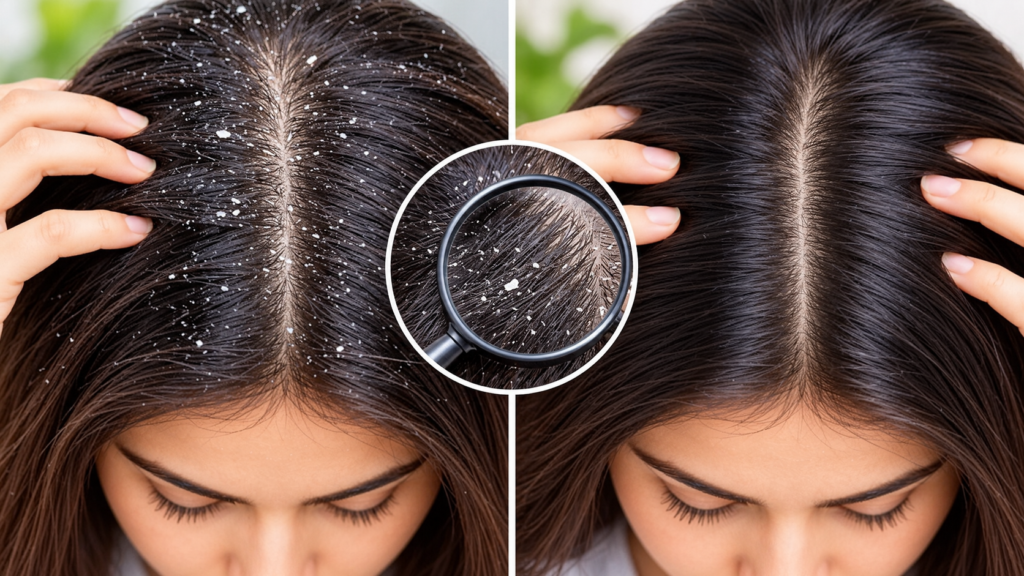

Seeing white flakes on your shoulders or feeling an itchy scalp throughout the day can be frustrating. Dandruff is a common scalp concern that affects people with different hair types. Sometimes it appears as small, dry flakes, while in other cases the scalp may feel oily, itchy or irritated.
The good news is that dandruff can often be managed with the right shampoo and a consistent hair-care routine. However, there is no guaranteed permanent cure for everyone. The best approach is to understand what is causing the flakes and choose a suitable treatment.
In this guide, we will explain the common causes of dandruff, useful shampoo ingredients, practical scalp-care habits and when to seek professional advice.
What Is Dandruff?
Dandruff is a common condition in which dead skin cells shed from the scalp and become visible as flakes in the hair or on clothing. It may also cause itching and discomfort.
Dandruff is not contagious, and having it does not mean that you have poor personal hygiene. It can be related to scalp oiliness, sensitivity to hair products, yeast naturally present on the skin or other scalp conditions.
Mild dandruff can often be managed at home with regular hair washing and a suitable anti-dandruff shampoo.
What Causes Dandruff?
Dandruff does not have just one cause. Several factors can contribute to scalp flaking and irritation.
#1. Excess Oil on the Scalp
Some people naturally have an oily scalp. Excess oil can contribute to dandruff and may make flakes look greasy or stick to the scalp.
#2. Malassezia Yeast
Malassezia is a type of yeast that naturally lives on human skin. In some people, it is associated with scalp irritation and flaking.
#3. Seborrheic Dermatitis
Seborrheic dermatitis can cause red, itchy and flaky patches on the scalp. The flakes may appear white or yellowish and sometimes feel greasy. It can also affect areas such as the eyebrows and sides of the nose.
#4. Dry or Irritated Scalp
Cold weather, dry air and certain hair-care products may make the scalp feel uncomfortable and flaky. Dry scalp and dandruff can look similar, but they are not always the same condition.
#5. Reaction to Hair-Care Products
Hair dyes, gels, sprays and styling products may irritate the scalp in some people. If you notice itching, redness or discomfort after using a new product, stop using it and observe whether the symptoms improve.
How to Control Dandruff Effectively
Choosing an appropriate anti-dandruff shampoo is usually the most practical starting point. The right ingredient depends on your scalp and the type of flaking you experience.
#1. Choose a Shampoo With Suitable Active Ingredients
Different anti-dandruff shampoos work in different ways. Check the product label for an active ingredient designed to manage dandruff.
| Active ingredient | How it helps |
|---|---|
| Ketoconazole | Helps control yeast associated with dandruff |
| Selenium sulfide | Helps reduce flaking and scalp symptoms |
| Salicylic acid | Helps loosen and remove built-up scales |
| Coal tar | Helps slow excessive skin-cell turnover |
| Zinc pyrithione | Used in some formulations to manage dandruff |
Not every ingredient is suitable for every scalp. If one shampoo does not help, another product with a different active ingredient may work better.
#2. Use Anti-Dandruff Shampoo Correctly
Using the right shampoo is only part of the process. It is also important to apply it properly.
Follow these simple steps:
- Wet your hair and scalp thoroughly.
- Apply the shampoo directly to your scalp.
- Gently massage it with your fingertips.
- Leave it on for the time mentioned on the product label.
- Rinse your scalp and hair thoroughly.
Some medicated shampoos need to remain on the scalp for several minutes before rinsing. Follow the instructions for your specific product rather than assuming that every shampoo works in the same way.
#3. Wash Your Hair According to Your Scalp Type
Washing frequency depends on your scalp and hair texture.
People with oily scalps may need to wash their hair more frequently, while those with dry, curly or textured hair may need a less frequent schedule.
The important thing is to keep your scalp clean without making your hair excessively dry. If your anti-dandruff shampoo causes irritation or burning, stop using it and seek suitable advice.
#4. Avoid Products That Irritate Your Scalp
You do not need a complicated hair-care routine to manage dandruff. In fact, using too many styling products can make it harder to identify what is irritating your scalp.
Try to limit products that cause itching or redness. If you recently changed your shampoo, hair dye or styling product and noticed new symptoms, consider stopping that product.
#5. Be Consistent With Your Routine
Dandruff may take a few weeks to improve. Changing shampoos too frequently or stopping treatment as soon as the flakes decrease may make it difficult to understand what is working.
Follow the product instructions consistently. If your symptoms do not improve after around four weeks, seek professional advice.
Which Anti-Dandruff Shampoo Should You Choose?
There are many shampoos available for dandruff, but choosing one based only on its brand name or popularity is not always helpful. Pay attention to its active ingredients, your scalp type and the product instructions.
If you are comparing different shampoo options, read our guide to Anti-Dandruff and Anti-Hairfall Shampoos. It provides an overview of shampoo products for readers exploring hair-care options. Always check current product labels and ingredients before making a purchase.
Remember that an anti-hairfall shampoo and an anti-dandruff shampoo do not necessarily serve the same purpose. Choose a product according to your main concern.
Everyday Habits for a Comfortable Scalp
Along with a suitable shampoo, a few simple habits can help you avoid unnecessary scalp irritation.
- Avoid scratching: Scratching can damage the skin and make irritation worse.
- Use lukewarm water: Very hot water may leave your scalp feeling uncomfortable.
- Clean your combs and brushes: Remove loose hair and product buildup regularly.
- Avoid excessive styling products: Use products that your scalp tolerates comfortably.
- Manage stress: Stress may worsen symptoms in some people. Regular rest and relaxation can support general well-being.
- Eat a balanced diet: Include a variety of foods to provide the nutrients your body needs.
These habits support general hair care, but they should not replace an appropriate dandruff treatment.
Should You Try Home Remedies for Dandruff?
You may come across suggestions to use lemon juice, baking soda, vinegar or essential oils to remove dandruff. However, these remedies are not reliable replacements for medicated anti-dandruff shampoos.
Concentrated tea tree oil and other essential oils may irritate the scalp or cause an allergic reaction. Applying lemon juice or baking soda directly to the scalp may also cause discomfort.
Instead of experimenting with harsh ingredients, choose a properly formulated product and follow its instructions.
When Should You Seek Professional Advice?
Mild dandruff often improves with suitable shampoo and regular scalp care. However, persistent symptoms may indicate another scalp condition that needs attention.
Seek advice from a qualified healthcare professional if:
- Your dandruff does not improve after using an anti-dandruff shampoo for around four weeks.
- Your scalp becomes very itchy, painful, red or swollen.
- You notice thick scales, crusting or sores.
- Flaky patches also appear on your face or other parts of your body.
- You experience patchy hair loss along with scalp symptoms.
Conditions such as seborrheic dermatitis, eczema, psoriasis and fungal infections can sometimes look like dandruff. The correct treatment depends on the underlying cause.
Frequently Asked Questions About Dandruff
Can dandruff be removed permanently?
There is no guaranteed permanent cure for dandruff. However, suitable shampoo and regular scalp care can help control flakes and reduce recurring symptoms.
How long does it take to control dandruff?
Some people notice improvement within a few weeks. The result depends on the cause of dandruff and the shampoo being used. If there is no improvement after around four weeks, seek professional advice.
Should I wash my hair every day if I have dandruff?
Not everyone needs to wash their hair daily. People with oily scalps may need more frequent washing, while dry or curly hair may require a different schedule. Choose a routine that suits your scalp and hair texture.
Does oiling the hair remove dandruff?
Hair oiling is not a proven treatment for dandruff. Heavy oils may make an oily scalp feel greasier and do not address every possible cause of flaking.
Is dandruff caused by poor hygiene?
No. Dandruff is not simply caused by poor hygiene. However, regular washing can help remove excess oil and loose flakes from the scalp.
Can dandruff cause hair loss?
Dandruff does not usually cause permanent hair loss. However, repeated scratching can irritate the scalp and contribute to hair breakage. If you notice patchy hair loss, seek professional advice.
Conclusion:
Dandruff can be annoying, especially when flakes and itching keep returning. But you do not need to try every home remedy or buy several different shampoos to manage it.
Start with a suitable anti-dandruff shampoo, follow its instructions and maintain a simple hair-care routine. Pay attention to how your scalp responds, and do not ignore persistent redness, irritation or unusual hair loss.
With the right approach, many people can keep dandruff under control and maintain a more comfortable scalp.
References
- American Academy of Dermatology – How to Treat Dandruff
- NHS – Dandruff
- Mayo Clinic – Dandruff: Diagnosis and Treatment
Disclaimer: This article is for general informational purposes only and is not a substitute for professional skincare advice. Before trying any skincare product or changing your routine, consult a qualified skincare or healthcare professional to make sure it is suitable for your skin.
About Author


