


Have you ever used a face scrub or exfoliating serum and noticed that your skin felt smoother afterward, only to experience dryness or redness a few days later? It can be difficult to know whether you are exfoliating too often or not often enough.
Exfoliation can help remove dead skin cells from the skin’s surface, but more exfoliation does not necessarily mean better results. The right frequency depends on your skin type, the product you use and how comfortably your skin tolerates it.
If you are new to exfoliation, starting slowly is usually the best approach. In this guide, you’ll learn how often to exfoliate your face, which products to consider and how to avoid common mistakes.
What Is Exfoliation?
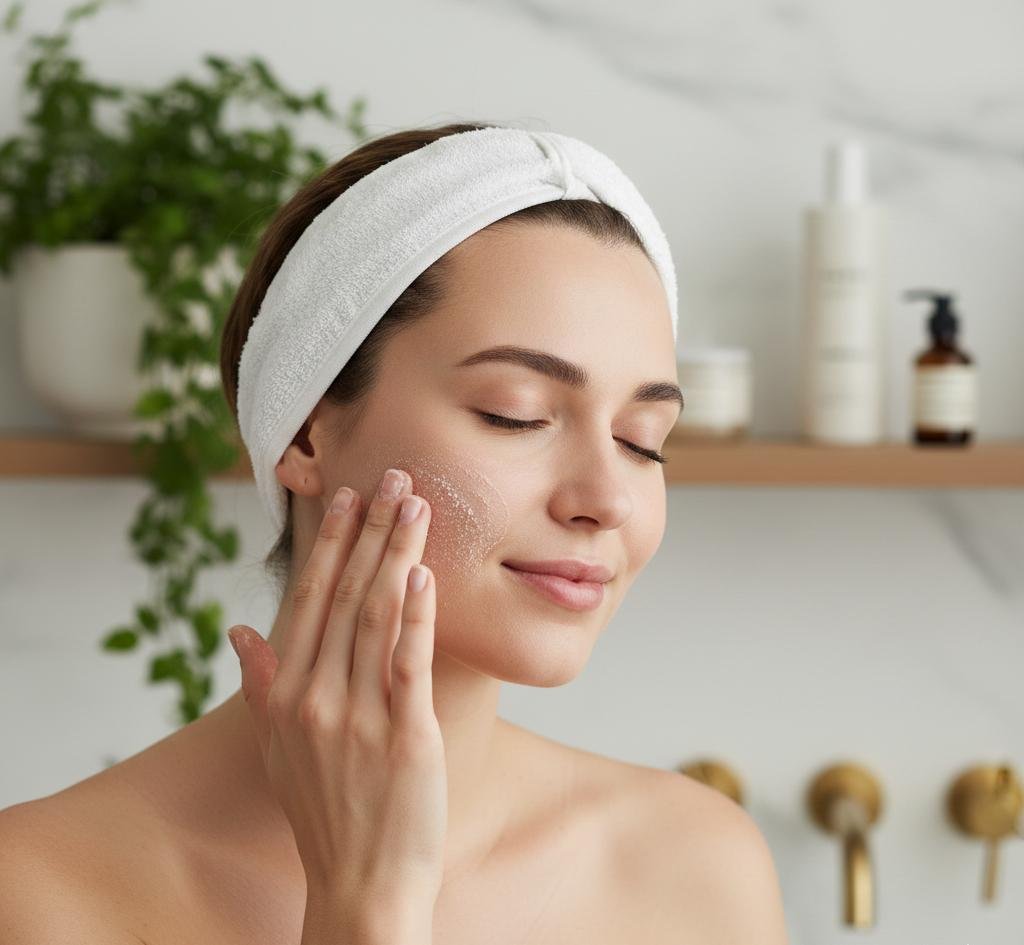
Exfoliation is the process of removing dead skin cells from the outer surface of your skin. It can help improve the appearance of rough texture and make skin feel smoother.
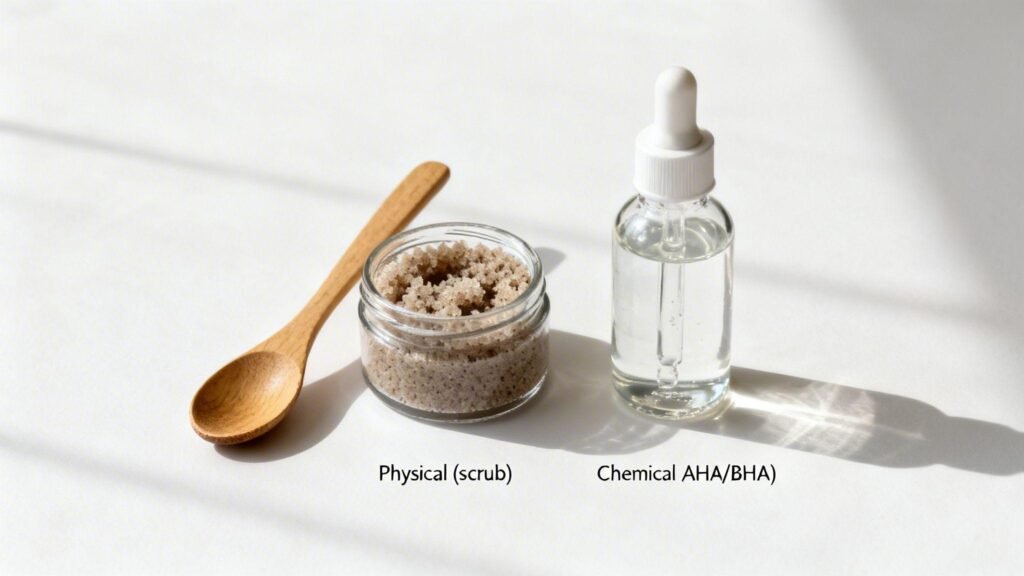
There are two main types of exfoliation:
- Physical exfoliation: Uses particles, brushes or other tools to loosen dead skin cells through gentle friction.
- Chemical exfoliation: Uses ingredients such as alpha hydroxy acids (AHAs) or beta hydroxy acids (BHAs) to help loosen the connections between dead skin cells.
Both types can irritate your skin if used too aggressively. You do not need to exfoliate every day to maintain a basic skincare routine.
How Often Should You Exfoliate Your Face?
There is no single exfoliation schedule that works for everyone. A product’s strength, formulation and instructions matter just as much as your skin type.
If you are a beginner, consider starting with once a week, provided the product is suitable for your skin and its label allows that frequency. Observe how your skin responds before considering any increase.
Here is a general guide to help you think about your needs.
#1. Oily Skin
Oily skin may feel greasy during the day or appear shiny, particularly around the forehead, nose and chin. Some people with oily skin also experience clogged pores.
A product containing salicylic acid, a BHA, may be useful for certain people because it can help exfoliate within oil-filled pores. However, oily skin does not automatically need frequent exfoliation.
Start with a gentle product and use it according to its instructions. If your skin becomes tight, flaky or irritated, reduce use or stop the product.
#2. Dry Skin
Dry skin may feel rough, tight or flaky, especially after cleansing or in cold weather.
Frequent scrubbing can make this discomfort worse. If your skin is dry but otherwise comfortable, a gentle exfoliating product may be an option, but focus on moisturizing first.
Avoid exfoliating skin that is cracked, inflamed or actively peeling from irritation.
#3. Sensitive Skin
Sensitive skin can react to products with redness, stinging, itching or burning. Exfoliating acids and rough scrubs may be difficult to tolerate.
You may not need an exfoliant at all. If you decide to try one, choose a product specifically formulated for your needs, follow the label carefully and introduce it cautiously.
If your skin frequently reacts to skincare products, seek advice from a qualified skincare or healthcare professional before adding an exfoliant.
#4. Combination Skin
Combination skin may feel oily in some areas and dry or tight in others.
You do not necessarily need to treat your entire face in the same way. Consider how each area responds, and avoid applying exfoliating products to dry or irritated patches.
A gentle product used sparingly may be more comfortable than a strong exfoliant applied across the whole face.
Physical vs. Chemical Exfoliation: Which Is Better?
Neither type is automatically better for everyone. The most suitable choice depends on the product, your skin’s condition and your tolerance.
Physical Exfoliation
Physical exfoliants include facial scrubs and certain cleansing tools. They remove surface buildup through friction.
If you use a scrub, choose one that is gentle and avoid vigorous rubbing. Rough particles and excessive pressure can leave skin irritated.
Physical exfoliation may not be suitable if your skin is sensitive, inflamed or already experiencing irritation.
Chemical Exfoliation
Chemical exfoliants use ingredients that help loosen dead skin cells.
Common examples include:
- Glycolic acid: An AHA often used to improve the appearance of uneven texture.
- Lactic acid: An AHA found in products designed to exfoliate the skin’s surface.
- Salicylic acid: A BHA commonly used in products for oily skin and clogged pores.
Different products contain different concentrations and formulations, so do not assume that all exfoliating acids work in the same way.
Choose one product to start with rather than combining several exfoliating ingredients immediately.
How to Exfoliate Your Face Safely
A careful routine can help reduce the chance of unnecessary irritation.
Step 1: Start With Clean Skin
Use a gentle cleanser to remove dirt, oil and other buildup. Pat your face dry if your exfoliant’s instructions recommend applying it to dry skin.
Do not use hot water or scrub your face while cleansing.
Step 2: Apply the Exfoliant as Directed
Read the product label before use. Some exfoliants are rinse-off products, while others are designed to remain on the skin.
Use only the recommended amount and follow the stated contact time. Leaving a product on longer than directed will not necessarily improve results and may increase irritation.
Step 3: Follow With Moisturizer
Moisturizer helps keep skin comfortable and supports its moisture barrier. Choose a formula that suits your skin and does not cause discomfort.
If you already use several active ingredients, consider simplifying your routine while you introduce an exfoliant.
Step 4: Protect Your Skin During the Day
Use broad-spectrum sunscreen with SPF 30 or higher during the day. Some exfoliating products can make skin more sensitive to sunlight, and sun protection remains important for skin health.
Follow the sunscreen’s directions for application and reapplication, particularly when spending extended time outdoors.
Step 5: Give Your Skin Time to Respond
Do not increase exfoliation simply because you have not noticed an immediate change. Results vary, and using a product more frequently than directed can cause irritation.
Pay attention to your skin’s comfort rather than following someone else’s routine.
Signs You May Be Exfoliating Too Much
Sometimes, skin that initially feels smooth starts to feel uncomfortable after repeated exfoliation. This can be a sign that your routine is too aggressive.
Watch for:
- Persistent redness.
- Burning or stinging when applying ordinary skincare products.
- Dryness, flaking or unusual tightness.
- Increased sensitivity to products you previously tolerated.
- Irritated or rough patches.
If these symptoms appear, stop exfoliating until your skin has recovered. Keep your routine simple with gentle cleansing, moisturizer and suitable sun protection.
If the irritation is severe, persistent or worsening, seek advice from a qualified skincare or healthcare professional.
Common Exfoliation Mistakes to Avoid
Exfoliating Every Day Without Checking the Instructions
Some products are designed for frequent use, while others should be used less often. Do not assume that daily exfoliation is suitable simply because a product is available over the counter.
Using Multiple Exfoliating Products Together
Combining a scrub, an exfoliating acid and other strong active ingredients can increase the risk of irritation.
Introduce one exfoliant at a time and follow its directions. Avoid combining products unless you know the combination is suitable for your skin.
Scrubbing Harder to Get Better Results
Applying more pressure can damage or irritate the skin. Gentle use is preferable to aggressive rubbing.
Exfoliating Already Irritated Skin
If your skin is red, cracked, sunburned or peeling from irritation, pause exfoliation. Allow the skin to recover before considering another exfoliating product.
Forgetting Moisturizer and Sunscreen
Exfoliation is only one part of skincare. Moisturizer can help maintain comfort, while sunscreen protects against UV exposure.
How Does Exfoliation Fit Into Your Skincare Routine?
If you want to keep your routine simple, you can use this general order on an evening when you exfoliate:
- Gentle cleanser.
- Exfoliating product, following its specific instructions.
- Moisturizer.
Avoid adding several new active ingredients to the same routine while you are learning how your skin responds.
On other days, a simple cleanser and moisturizer routine may be enough. In the morning, finish your skincare routine with broad-spectrum sunscreen.
For more guidance, read our articles on how to build a simple skincare routine for beginners and what order to apply skincare products.
FAQs.
Q1. Is it okay to exfoliate my face once a week?
Once a week can be a cautious starting point for some beginners, provided the product is appropriate and its instructions allow it. It is not a universal recommendation, and some people may need to exfoliate less often or avoid exfoliation entirely.
Q2. Should I exfoliate in the morning or at night?
Many people prefer to exfoliate in the evening because it is easy to follow with moisturizer. However, the best timing depends on the product’s directions. Daily sun protection is important regardless of when you exfoliate.
Q3. Can exfoliation help with blackheads?
Certain products containing salicylic acid may help with clogged pores and blackheads. Results vary, and overuse can irritate the skin. Choose a product suitable for your needs and follow the label.
Q4. Can I exfoliate if I have acne?
It depends on your skin’s condition and the products you use. Some exfoliating ingredients may help with clogged pores, but aggressive scrubbing can worsen irritation. Avoid exfoliating inflamed or broken skin, and seek professional advice if acne is persistent or severe.
Q5. Should I exfoliate if my skin is peeling?
Not if the peeling is associated with irritation, sunburn or a damaged skin barrier. Pause exfoliation and focus on gentle skincare. If peeling continues or worsens, seek professional advice.
Q6. Do I need to exfoliate to have healthy-looking skin?
No. Exfoliation is optional. A consistent routine with gentle cleansing, moisturizer and daytime sun protection can be a useful foundation without any exfoliating product.
Conclusion
Exfoliation can be a useful addition to skincare, but it is not something everyone needs to do frequently. Start cautiously, choose a product that suits your skin and follow its instructions.
If your skin feels comfortable, there may be no reason to increase the frequency. If it becomes irritated, take a break rather than trying to push through the discomfort.
A gentle, consistent routine is often a better starting point than using multiple strong products.
Disclaimer: This article is for general informational purposes only and is not a substitute for professional skincare advice. Before trying any skincare product or changing your routine, consult a qualified skincare or healthcare professional to make sure it is suitable for your skin.
About Author


