
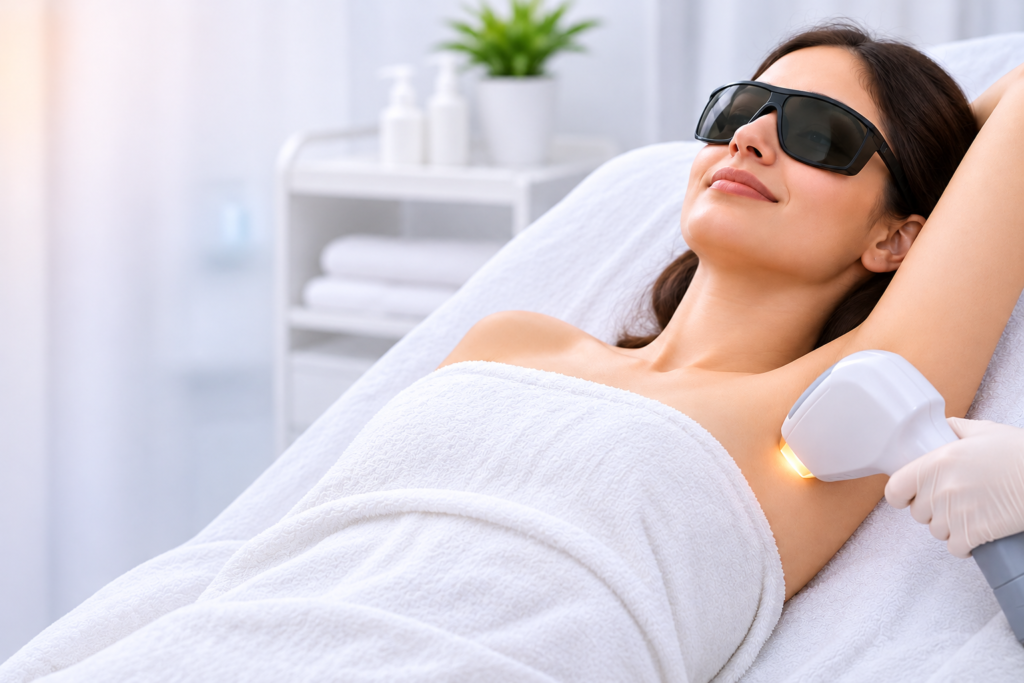

Unwanted hair is a common concern, and people use different methods to manage it. Shaving is quick, waxing removes hair for longer, and hair-removal creams offer another temporary option. However, if you are tired of repeating these methods, you may have considered laser hair removal.
Laser hair removal is a light-based procedure designed to reduce unwanted hair growth over time. It can be useful for areas such as the face, underarms, legs, arms, back and bikini line. However, the results depend on your hair colour, skin tone, treatment area and the equipment being used.
Before booking a session, it is worth understanding how the procedure works, how many sessions may be needed, what it feels like and what risks to consider. This guide covers the important points to help you make an informed decision.
What Is Laser Hair Removal?
Laser hair removal is a cosmetic procedure that uses concentrated light energy to target the pigment, known as melanin, in hair. The hair absorbs this light and converts it into heat. The heat damages the hair follicle, which can slow down future hair growth.
The treatment is intended to provide long-term hair reduction, rather than guaranteeing that every hair will be removed permanently. Some hair may grow back over time, and occasional maintenance sessions may be needed.
Laser hair removal is commonly used on:
- Upper lip and chin
- Underarms
- Arms and legs
- Chest and back
- Bikini line
The areas that can be treated depend on the equipment, your skin and hair characteristics, and the professional carrying out the procedure.
How Does Laser Hair Removal Work?
Hair grows in different stages. Laser treatment works best when a hair is in its active growth phase because the follicle is more responsive to the treatment at that time.
Since all hair is not in the same growth phase at once, one appointment cannot effectively target every follicle. This is why a series of sessions is usually recommended.
During a typical appointment:
- The treatment area is examined and cleaned.
- You may be asked to wear protective eyewear.
- The professional adjusts the device according to your skin and hair characteristics.
- A handheld laser device is moved over the treatment area.
- Light energy targets the pigment in the hair and heats the follicle.
Some devices have cooling features to make the procedure more comfortable and help protect the skin.
You may notice treated hairs shedding gradually over the following days or weeks. This is different from immediate hair removal, so do not expect the area to look completely smooth straight after the appointment.
Benefits of Laser Hair Removal
Laser treatment may be worth considering if you want to reduce the time and effort spent on regular hair removal.
#1. Longer-Term Hair Reduction
One of the main reasons people choose this treatment is the possibility of reducing unwanted hair growth for an extended period. Hair that grows back may become finer or less noticeable, although individual results vary.
#2. Less Frequent Shaving and Waxing
If you regularly shave or wax, managing unwanted hair can become part of your weekly routine. Successful laser treatment may reduce how often you need these methods.
#3. May Help With Shaving-Related Irritation
Frequent shaving can cause razor bumps, ingrown hairs and irritation in some people. Reducing hair growth may help reduce these problems, particularly in areas where shaving regularly causes discomfort.
#4. Can Treat Different Body Areas
Depending on your suitability and the device used, treatment may be available for several areas, including the legs, arms, underarms, back and selected facial areas.
#5. Gradual Results
Hair reduction happens over a course of sessions. You can discuss your progress with the professional carrying out the treatment and adjust the plan if necessary.
Laser Hair Removal vs. Shaving, Waxing and Other Methods
Different hair-removal methods suit different needs. The right choice depends on your budget, skin sensitivity, desired results and willingness to attend repeated appointments.
| Method | How it works | How long results last |
|---|---|---|
| Shaving | Cuts hair at the skin’s surface | Usually a few days |
| Waxing | Removes hair from the root | Usually a few weeks |
| Hair-removal cream | Uses chemicals to dissolve hair near the skin surface | Usually several days |
| Laser hair removal | Uses light energy to damage hair follicles | Long-term reduction; maintenance may be needed |
| Electrolysis | Uses an electrical current to destroy individual hair follicles | Can provide permanent hair removal when successfully completed |
Laser treatment and electrolysis are not the same. Laser devices cover an area of skin and target pigmented hair, while electrolysis treats individual follicles. A qualified professional can help you understand which option is appropriate.
Who Is a Suitable Candidate?
Laser hair removal is not equally effective for everyone. The result depends on the contrast between the pigment in your hair and the surrounding skin, as well as the type of device and its settings.
Traditionally, the treatment has worked particularly well on darker hair because it contains more pigment for the laser to target. However, modern laser systems can treat a wider range of skin tones when the correct equipment and settings are selected.
People with blonde, white, grey or some red hair may not respond as well because these hair colours have less of the pigment targeted by many laser systems.
If you have darker skin, it is especially important to choose a suitably trained medical professional who has experience treating your skin tone. The wrong device or settings can increase the risk of burns and changes in skin colour.
A consultation is important before treatment. Discuss your skin history, medicines, previous reactions to cosmetic procedures and any concerns about the treatment area.
Is Laser Hair Removal Safe for Indian Skin?
People with Indian skin tones can be considered for laser hair reduction, but the treatment must be selected and adjusted carefully.
Brown skin contains more melanin than very fair skin. Since laser energy is attracted to pigment, the professional needs to choose a suitable wavelength and settings that target the hair while reducing unwanted heating of the surrounding skin.
The Nd laser is one option that may be considered for darker skin tones. However, no single device is automatically suitable for everyone. Your skin tone, hair thickness, treatment area and medical history all matter.
Before starting a full course, ask whether a test spot is appropriate and how your skin will be monitored after it. Do not book a treatment simply because a clinic advertises that its machine works for every skin type.
How Many Sessions Are Needed?
Most people need several sessions because hair grows in cycles. The exact number depends on the treatment area, hair thickness, skin and hair colour, hormonal factors and the device used.
Some people may need around 4–8 sessions, while others may require more. Appointments are usually spaced several weeks apart so that more hairs can enter the active growth phase before the next treatment.
Facial hair can be particularly affected by hormonal changes, so maintenance treatments may be needed. Your treatment provider should give you an individual estimate rather than promising a fixed number of sessions.
Does Laser Hair Removal Hurt?
The sensation varies from person to person and depends on the treatment area, device and individual sensitivity.
Some people describe it as a quick snapping sensation against the skin, similar to a small rubber-band flick. You may also feel warmth or mild discomfort during the procedure.
Cooling systems and, in selected cases, numbing products may help make treatment more comfortable. Tell the professional if you experience unusual pain or a burning sensation during the session.
Possible Side Effects and Risks
Laser hair removal is a procedure that needs proper training and suitable equipment. Temporary reactions can happen, and more serious complications are possible, particularly when the treatment is performed incorrectly.
Possible side effects include:
- Redness and swelling: The treated area may look slightly red or swollen for a short time.
- Temporary discomfort: Mild warmth, tenderness or a stinging sensation may occur.
- Changes in skin colour: The treated skin may become darker or lighter. These changes can sometimes last.
- Blisters or burns: Incorrect settings or poor technique can damage the skin.
- Scarring: Scarring is uncommon but can occur.
- Changes in skin texture: Some people may experience an unusual skin reaction after treatment.
The risk of complications can be higher if the skin is tanned, the device is unsuitable or the person operating it lacks adequate training.
Seek medical advice if you develop severe pain, blistering, spreading redness, signs of infection or a reaction that does not improve as expected.
How to Prepare Before a Laser Hair Removal Session
Good preparation can help reduce avoidable irritation and make it easier for the professional to plan your treatment.
Before your appointment:
- Avoid tanning: Stay away from tanning beds and deliberate tanning. Tell the professional if you have recently developed a tan.
- Avoid waxing and plucking: These methods remove the hair from the follicle and can interfere with laser treatment. Ask how long you should avoid them before your appointment.
- Follow shaving instructions: You may be asked to shave the area before treatment, often the day before. Follow the clinic’s specific advice.
- Discuss medicines: Tell the professional about prescription medicines, over-the-counter products and skincare treatments you use.
- Share your skin history: Mention previous burns, pigmentation changes, scarring or reactions to light-based procedures.
- Ask about a test spot: Find out whether a test patch is recommended for your skin type and treatment area.
Do not hide recent sun exposure or medication use just to avoid postponing an appointment. These details can affect treatment safety.
Aftercare: What Should You Do After Treatment?
Your skin may be sensitive immediately after a session. Follow the instructions given by the person performing the treatment, as aftercare can vary depending on the device and your skin response.
Some general precautions include:
- Avoid direct and unnecessary sun exposure on the treated area.
- Use broad-spectrum SPF 30 or higher on exposed skin, as advised by your treatment provider.
- Avoid hot showers, saunas and activities that make the treated area excessively warm if your skin is irritated.
- Do not scrub, exfoliate or use harsh skincare products on the treated area until your skin has settled and your provider says it is safe.
- Avoid waxing or plucking between sessions if you are continuing laser treatment. Ask whether shaving is permitted.
- Do not pick, scratch or rub irritated skin.
For more everyday sun-care advice, read our guide to a simple skincare routine for beginners.
How Much Does Laser Hair Removal Cost?
The cost of laser hair removal varies from one clinic to another. There is no single price that applies to every person or treatment area.
The final cost may depend on:
- Treatment area: A small area such as the upper lip may cost less than the legs or back.
- Number of sessions: The total expense depends on how many appointments are needed.
- Equipment used: Different laser systems and technologies may have different pricing.
- Clinic and location: Prices can vary between cities and providers.
- Maintenance sessions: Some people need occasional follow-up appointments.
When comparing prices, ask whether the quoted amount is per session or for a complete package. Also check what happens if you need additional sessions. A very low price should not be the only reason to choose a provider; training, safety procedures and suitable equipment matter.
Questions to Ask Before Choosing a Clinic
Before paying for a package, arrange a consultation and ask a few practical questions:
- Who will assess my skin and perform the treatment?
- What training and experience does the treatment provider have?
- Have they treated people with a skin tone similar to mine?
- Which laser technology will be used, and why is it suitable for me?
- How many sessions might I need?
- What side effects should I watch for?
- Is a test spot recommended?
- What is included in the quoted price?
- What should I do if I experience a reaction after treatment?
Choose a provider who explains both the benefits and limitations. Be cautious of claims such as guaranteed permanent removal, zero side effects or results for every hair and skin type.
FAQs.
Q1. Is laser hair removal permanent?
Laser hair removal can provide long-term hair reduction, but it does not guarantee that all hair will be removed permanently. Some hair may grow back, and maintenance sessions may be needed.
Q2. Can laser hair removal be done on the face?
Selected facial areas, such as the upper lip and chin, may be treated. The treatment should be planned carefully, particularly around sensitive areas. Laser hair removal should not be used on the eyelids, eyebrows or surrounding areas because of the risk of serious eye injury.
Q3. Can I shave between laser sessions?
Shaving is generally allowed between sessions because it cuts hair at the skin’s surface without removing the follicle. However, follow the instructions provided by your treatment professional.
Q4. Does laser hair removal work on thin or light-coloured hair?
The results may be limited on very fine or light-coloured hair because many laser systems rely on pigment in the hair. Blonde, white, grey and some red hairs may not respond well.
Q5. Can laser hair removal cause dark spots?
Yes. Temporary or, less commonly, lasting changes in skin colour can occur. The risk may increase with tanning, unsuitable settings or incorrect treatment. Proper assessment and sun protection are important.
Q6. How long does one laser hair removal session take?
It depends on the size of the area. A small area, such as the upper lip, may take only a few minutes, while larger areas can take considerably longer.
Q7. Is laser hair removal suitable for men?
Yes. Men may consider treatment for areas such as the back, chest, shoulders, neck or beard line. The treatment plan depends on hair density, skin tone and personal goals.
Conclusion
Laser hair removal can be a useful option for people who want to reduce unwanted hair and spend less time on regular shaving or waxing. However, the results are not identical for everyone. Hair colour, skin tone, treatment area, equipment and professional experience all influence the outcome.
Before choosing a clinic, take time to understand the procedure, discuss possible risks and ask for a treatment plan suited to your skin and hair. Avoid making a decision based only on discounts or promises of permanent results.
Medical References
The information in this article is based on guidance from established medical and healthcare organisations. You can explore the following resources to learn more about laser hair removal, its safety, preparation and possible side effects.
- American Academy of Dermatology (AAD): Laser Hair Removal FAQs
Read about how laser hair removal works, expected results, possible side effects and aftercare.
https://www.aad.org/public/cosmetic/hair-removal/laser-hair-removal-faqs - American Academy of Dermatology (AAD): Laser Hair Removal Preparation
Learn what to discuss with a treatment provider before your appointment and how to prepare your skin.
https://www.aad.org/public/cosmetic/hair-removal/laser-hair-removal-preparation - Mayo Clinic: Laser Hair Removal
Find general information about the procedure, benefits, risks and what to expect.
https://www.mayoclinic.org/tests-procedures/laser-hair-removal/about/pac-20394555
These external resources are provided for further reading. SkinCaresAdvice does not replace individual medical advice or treatment.
Disclaimer: This article is for general informational purposes only and is not a substitute for professional skincare advice. Before trying any skincare product or changing your routine, consult a qualified skincare or healthcare professional to make sure it is suitable for your skin
About Author


